Interactive Visual Dashboards Using R Shiny – Livestream Seminar

Code Horizons presents Interactive Visual Dashboards Using R Shiny, a 3-day seminar taught by Adam D. Rennhoff on April 30-May 2.

In this seminar, you'll learn how to create interactive dashboards using the open-source Shiny package for R, enabling you to communicate complex information effectively. By the end of the course, you will have a template and the experience necessary to build your own “real-world” dashboards.

This livestream seminar will be held via Zoom, but you can also join asynchronously by viewing the recorded videos of each session.

Watch the first hour of this course on the Statistical Horizons YouTube channel!
Please share this information with anyone who may be interested. Email
kaity@statisticalhorizons.com with any questions.

Thanks,
Kaity

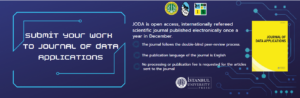
Submit Your Manuscript to the Journal of Data Applications

You can submit your novel and original data application research to the Journal of Data Applications, an Istanbul University Press journal, without any disciplinary restrictions. 

Journal of Data Applications is open access, internationally refereed scientific journal published electronically annually (in December) within the body of Istanbul University Faculty of Economics, Department of Management Information Systems. The journal follows the double-blind peer-review process. The publication language of the journal is English. No processing or publication fee is requested for the articles sent to the journal. 

The Journal of Data Applications publishes original research articles, reviews, and reports on data collection, storage, transmission, preprocessing, analysis, visualization, and interpretation, focusing on statistics, artificial intelligence, machine learning, deep learning, and data mining applications. The scope of the Journal of Data Applications includes various application studies from all disciplines in areas such as information retrieval and extraction, clustering, predicting and forecasting applications, decision support systems, recommendation systems, image, sound, and pattern recognition and processing, natural language processing, signal processing, computer vision, big data processing, and time series analysis.

Please address any inquiries about the Journal of Data Applications to joda@istanbul.edu.tr 

Please click here to submit a manuscript for our December Issue.

Best Regards.

DGMM 2025 Deadline Extension and 3rd CfP

Third call for papers and deadline extension for

4th International Conference on Discrete Geometry and Mathematical Morphology

University of Groningen, The Netherlands November 3-6, 2025

Url:

https://iapr.org/dgmm2025

At the request of several authors the deadlines  for submission of abstracts and full papers have been extended by two weeks.
Important dates:
  • Title+abstract submission: March 28 April 11, 2025
  • Paper submission deadline: April 7 April 21, 2025
  • Preliminary author notification: June 13, 2025
  • Rebuttal deadline: June 30, 2025
  • Final acceptance: July 11 , 2025
  • Camera ready deadline: September 8, 2025
  • Conference dates: November 3-6, 2025

The submission for papers is now open for the 4th International Conference on Discrete Geometry and Mathematical Morphology (DGMM 2024), to be held at the University of Groningen, The Netherlands, on November 3-6, 2025.

DGMM 2025 will be the fourth joint event between the two main conference series of IAPR TC18, the International Conference on Discrete Geometry for Computer Imagery (DGCI) and the International Symposium on Mathematical Morphology (ISMM).

DGMM offers the opportunity for researchers, students, and practitioners to share and discuss novel high quality research results within the fields of discrete geometry and mathematical morphology, and their applications to image processing and image analysis. Both theoretical and application-focused contributions related to these fields are welcome. The proceedings will be published by Springer in Lecture Notes in Computer Science.

CfP IEEE International Conference on Advanced Visual and Signal-Based Systems (AVSS)

The 21st IEEE International Conference on Advanced Visual and Signal-Based Systems (AVSS)

Aug 11 – 13, 2025

Tainan, Taiwan

http://avss2025.org 


AVSS 2025 marks the 21st edition of the IEEE International Conference on Advanced Visual and Signal-Based Systems, sponsored by the IEEE Signal Processing Society (SPS). AVSS is a premier international forum in image and video processing and signal-based analytics that brings together experts from academia, industry, and government to advance the frontiers of theories, methods, systems, and applications. In addition, AVSS 2025 also explores the robustness, security, privacy, and fairness issues in applying AI and machine learning algorithms for image and video analytics. AVSS 2025 will feature a main conference and multiple associated workshops, challenge contests, and tutorials. Topics of interest include, but are not limited to:

Topics

Image and Video Analytics

Detection, Segmentation, and Recognition

Face, Pose, and Gesture Analysis

Action, Activity, and Event Understanding

Image and Video Synthesis, Generative AI

Biometrics

Tracking, Counting, Motion Analysis

Multi-view or 3D Analytics

Aerial and Drone Video Analysis

Datasets and Evaluation

Medical Image Analysis


Model Security, Privacy, Fairness, and Robustness

Privacy-Preserving Machine Learning

Adversarial Machine Learning

Secure Data Sharing and Exchange

Authentication and Authorization

Security and Privacy in the Internet-of-Things

Trustworthy AI, Ethical Use of AI Technologies


Multi-modal Analytics 

Vision-Language, LLM, and Foundational Models

Fusion Approaches for Multi-modal Data Processing

Registration, Calibration, Robust Analysis of Multiple Sensors or Modalities

Audio and Speech Analysis

Multi-spectrum Image/Video Analysis

Medical Image Analysis


IoT and Signal Analytics

Cybersecurity Threat Detection and Response

• Forensic Analysis of Manipulated or AI-Generated Contents

Edge AI Computation


Systems and Applications

System and Applications for Smart Cities

• System and Applications for Public Safety

• System and Applications for Home and Business Security

System and Applications for Critical Infrastructure


Paper Submission:

Prospective authors are invited to submit

1. Full-length, high-quality papers presenting original research results, which should not exceed six pages (including references)
2. Short papers and demo papers, which should not exceed four pages (including references)
3. Extended Abstracts consisting of one- to two-page submissions (including references)

Submissions must adhere to the IEEE double-column format and are limited to six pages, including figures, tables, and references. All accepted full, short, and demo papers presented at AVSS 2025 will be included in the conference proceedings and published in the IEEE Xplore digital library. The papers in the abstract sessions will be presented at the conference but not included in the proceedings. Submissions can be made through the CMT online portal at https://cmt3.research.microsoft.com/AVSS2025. The paper review process will be double-blind to ensure fairness and impartiality.

Important Dates:

● Paper deadline (full, short, and demo papers): April 15, 2025, Anytime on Earth (AoE)
● Extended Abstract: April 22, 2025, Anytime on Earth (AoE)
● Notification of acceptance: May 19, 2025
● Camera-ready deadline: May 26, 2025
● AVSS 2025 Conference Dates: Aug 11-13, 2025

Fast Continuum 2025 Workshop Co-located with IEEE SERVICES

in conjunction with IEEE QSW Conference, IEEE Cloud, IEEE Edge, part of IEEE SERVICES 2025

July 7-12 2025, Helsinki, Finland

https://services.conferences.computer.org/2025/fastcontinuum-2025/

INTRODUCTION

==============

As industries increasingly adopt distributed intelligence, new challenges emerge in managing heterogeneous resources, ensuring performance guarantees, and securing end-to-end application execution. The computing continuum —a seamless integration of cloud, edge, IoT and, in the very near future, quantum computers— aims at addressing these challenges and has revolutionized the way we design, deploy, and optimize modern applications.

The FastContinuum workshop invites researchers, industry experts, and practitioners to contribute innovative solutions, share experiences, and engage in discussions on the future of computing beyond conventional cloud models. This workshop serves as a way for exploring emerging trends, methodologies, and frameworks that facilitate intelligent, adaptive, and high-performance computing across the continuum.

TOPICS OF INTEREST

==================

* Computing Continuum Foundations

* Design principles and architecture of continuum systems

* Application scheduling and orchestration strategies

* Energy-efficient continuum computing

* Quantum computing and HPC as computing continuum components

* Performance & Optimization

* Modeling, evaluation, and performance optimization

* AI-driven optimizations

* Large Language Models requirements for the computing continuum

* Artificial Intelligence & Emerging Technologies

* Generative AI for designing and managing continuum software

* Machine Learning and AI applications in the continuum

* Augmented Reality and immersive computing

* Software & Infrastructure Innovations

* Microservices, Function as a Service (FaaS), and serverless computing

* Cyber-physical systems, IoT, digital twins, and industrial internet

* Data-intensive and real-time stream processing systems

* Security, Automation, & Resilience

* Infrastructure as Code and automation in the continuum

* DevSecOps for distributed applications

* Autonomous, resilient, and adaptive systems

IMPORTANT DATES

================

Workshop paper submissions: April 7, 2025

Notification of acceptance: May 16, 2025

Camera-ready copies and registration: May 30, 2025

Workshop date: TBD

SUBMISSION GUIDELINES

======================

Authors are invited to submit original, unpublished papers that are not being considered in another forum. We solicit full papers (max. 6 pages) as well as short and demo papers (max. 4 pages). Short papers can include reports about research activities not mature enough for a full paper as well as new ideas and vision papers. All submissions must conform to the standard IEEE template for conference proceedings: https://www.ieee.org/conferences/publishing/templates.html. More specifically, the double-column formats have to be used for all paper submissions. Each paper submission will be reviewed by at least three members of the program committee. Papers can be submitted via EasyChair: https://easychair.org/my/conference?conf=2025ieeeservices, “[FastContinuum] Workshop on Fast Continuum” track.

Papers will be published in the IEEE Services 2025 Companion Proceedings volume (To be confirmed).

At least one author of each accepted paper is required to attend the workshop and present the paper.

WORKSHOP GENERAL CHAIRS

==========================

Danilo Ardagna, Elisabetta Di Nitto (Politecnico di Milano, Italy)

WORKSHOP PROGRAM COMMITTEE CHAIRS

=======================================

Juncal Alonso Ibarra (Tecnalia, Spain), Federica Filippini (University of Milano-Bicocca, Italy)

PUBLICITY CHAIR

================

Marco Garlini (Politecnico di Milano, Italy)

PC COMMITTEE

==============

* Vasilios Andrikopoulos, University of Groningen, The Netherlands

* Matija Cankar, COMSENSUS/JSI, Slovenia

* Marco Casiero, Microsoft, Italy

* Michele Chiari, Technischen Universität Wien, Austria

* Jean-Christophe Deprez, Centre d'Excellence en Technologies de l'Information et de la Communication (CETIC), Belgium

* Karim Djemame, University of Leeds, UK

* Maria Fazio, University of Messina, Italy

* Francesc Lordan, Barcelona Supercomputing Center (BSC-CNS), Spain

* Fabrizio Magugliani, E4 Computer Engineering, Italy

* Dana Petcu, University of West Timisoara, Romania

* Alessandro Raganato, University of Milano-Bicocca, Italy

* Domenico Siracusa, University of Trento, Italy

* Jacopo Soldani, University of Pisa, Italy,

* Ettore Trevisiol, AWS, Italy

* Alessandro Tundo, Technische Universität Wien, Austria

* Indika Kumara, JADS, The Netherlands

* Alireza Furutanpey, Technischen Universität Wien, Austria (quantum)

* Radosław Piliszek, 7Bulls, Poland

* Josu Diaz de Arcaya, Tecnalia

Design by 2b Consult