Dear distinguished AI Professor or Senior Scientist (PhD holder),
the International AI Doctoral Academy (AIDA) aims to become a reference initiative for AI education in Europe and implement mechanisms for inter-university sharing of AI educational assets at PhD-level. As part of the program, AIDA offers a series of courses on Artificial Intelligence and related fields given by distinguished lecturers.
We invite you to contribute to this initiative for the definition of the AIDA Spring 2024 semester program.
You can participate in the AIDA program by offering new or opening-up existing courses targeted to AIDA students* or other students worldwide according to the participation terms of your own organization. Short/Very Short course formats (5-16 hours) are typically encouraged, while semester courses, or asynchronous mode web courses will be considered as well. Accepted courses will be listed on AIDA website (https://www.i-aida.org/) and will be advertised for free with the support of AIDA dissemination channels. Proposals for courses for the AIDA Spring 2024 semester program should be sent to: Prof. Prof. Stefano Berretti stefano.berretti@unifi.it, and Ms. Efi Patmanidou epatman@csd.auth.gr no later than January 31st, 2024 and will be evaluated by the AIDA Committee by February 10th, 2024.
Proposals for AIDA Courses should include (pls, fill in the attached document): Course title: Lecturer name & affiliation: Host Institution: Content and organization: Course details about the content. 1 paragraph Level: (Undergraduate/Postgraduate) Course Duration: Hours Course Type: (Short/Semester/Lecture series/Seasonal School) Participation terms: Registration fee policy for external (non-AIDA) students, e.g., free of charge or fee of ??? Euros. Special terms for AIDA students, e.g., discount 50% or free for X number of AIDA students. Add text for a) non-AIDA student registration and AIDA student registration/enrollment, as in (6) below. Lectures plan: Days/time Proposed schedule: Start date – End date Language: English/Other Modality: Online/in person Notes: Are there exams? Details on how to successfully complete the course. 1-2 sentences. Course Link:
*AIDA students may be PhD students, post-doc researchers, possibly qualified MSc students or professionals of AIDA Members
Best regards,
Stefano Berretti AIDA course planning _______________________________ Prof. Stefano Berretti, Ph.D. Media Integration and Communication Center (MICC) & Department of Information Engineering (DINFO) University of Florence via S. Marta 3 – 50139, Florence – ITALY email: stefano.berretti 'at' unifi.it phone: +39 055 275852
Applications are open for the interdisciplinary summer school
“Cognitive Foundations of Decision-Making.”
The summer school is aimed at young scholars interested in decision-making in general, and the neural and cognitive foundations of decision-making in particular. The summer school will be held on July 22–27, 2024, on the beautiful campus of University Mohammed VI Polytechnic, in Rabat, Morocco.
Federated Learning (FL) has become an important privacy-preserving paradigm in various machine learning tasks. However, the potential of FL in computer vision applications, such as face recognition, person re-identification, and action recognition, is far from being fully exploited. Moreover, FL has rarely been demonstrated effectively in advanced computer vision tasks such as object detection and image segmentation, compared to the traditional centralized training paradigm. This workshop aims at bringing together researchers and practitioners with common interests in FL for computer vision and studying the different synergistic relations in this interdisciplinary area. The day-long event will facilitate interaction among students, scholars, and industry professionals from around the world to discuss future research challenges and opportunities.
Keynote speakers
Dr. Lingjuan Lyu, Senior research scientist and team leader in Sony AI
Dr. Nathalie Baracaldo, Research Staff Member at IBM’s Almaden Research Center in San Jose, CA
Dr. Virginia Smith, Machine Learning Department at Carnegie Mellon University
Dr. Peter Richtaìrik, Computer Science at the King Abdullah University of Science and Technology (KAUST), Thuwal, Saudi Arabia
Dr. Zhangyang “Atlas” Wang, Department of Electrical and Computer Engineering, The University of Texas at Austin
Dr. Mang Ye, School of Computer Science, Wuhan University, China
Dr. Peter Kairouz, Google Research, USA
Call for paper
Main research topics of relevance to this workshop include, but are not limited to:
Novel FL models for computer vision tasks, e.g., scene understanding, face recognition, object detection, person re-identification, image segmentation, human action recognition, medical image processing, etc.
Privacy-preserving machine learning for computer vision tasks
Personalized FL models for computer vision applications
Novel computer vision applications of FL and privacy-preserving machine learning
FL frameworks and tools designed for computer vision applications and benchmarking
Novel vision datasets for FL
Optimization algorithms for FL, particularly algorithms tolerant of data heterogeneity and resource heterogeneity
Approaches that scale FL to larger models, including model pruning and gradient compression techniques
Label efficient learning in FL, e.g., self-supervised learning, semi-supervised learning, active learning, etc.
Neural architecture search (NAS) for FL
Life-long learning in FL
Attacks on FL including model poisoning, data poisoning, and corresponding defenses
Fairness in FL
Federated domain adaptation
Privacy leakage and defense in the FL environments
Privacy-preserving Generative models for CV
FL based CV pipeline for scene understanding and visual analytics
Organizers
Dr. Chen Chen, Assistant Professor, Center for Research in Computer Vision, University of Central Florida
Matias Mendieta, Ph.D. Candidate, Center for Research in Computer Vision, University of Central Florida
Salman Avestimehr, Professor, University of Southern California, Inaugural Director of the USC-Amazon Center for Secure and Trusted Machine Learning
Zhengming Ding, Assistant Professor, Tulane University
Mi Zhang, Associate Professor, Ohio State University
Ang Li, Assistant Professor, Department of Electrical and Computer Engineering, University of Maryland (UMD) College Park
Bo Li, Associate Professor, Department of Computer Science, University of Chicago
Shiqiang Wang, Staff Research Scientist, IBM T. J. Watson Research Center
Yang Liu, Associate Professor, Institute for AI Industry Research (AIR), Tsinghua University
Gauri Joshi, Associate Professor, Department of Electrical and Computer Engineering, Carnegie Mellon University
Saeed Vahidian, Postdoctoral Associate, Department of Electrical and Computer Engineering, Duke University
Paper (& supplementary material) Submission Deadline: March 11, 2024 (11:59 PM, PST)
Notification: April 6, 2024 (11:59 PM, PST)
Camera-Ready: April 14, 2024 (11:59 PM, PST)
Accepted papers will be published in conjunction with CVPR 2024 proceedings. Paper submissions will adhere to the CVPR 2024 paper submission style, format, and length restrictions.
Programación de Cursos y Webinars de MARZO y ABRIL 2024
Aquí encontra un listado de Cursos y Webinars ofrecidos por AADECA para socios, estudiantes, docentes y profesionales del sector, los mismos se realizan por la plataforma ZOOM. Conocimiento – Didáctica – Interacción con los alumnos, dictados por los más prestigiosos disertantes
En el mundo de la automatización industrial, la eficiencia y la versatilidad son clave. Linux, un sistema operativo de código abierto, proporciona una base sólida y segura para el control de procesos. Python, por su parte, destaca como un lenguaje de programación potente y fácil de aprender, permitiendo la creación de soluciones personalizadas y eficientes.
¿Qué podemos aprender?
Dominio de Linux para Automatización: Desde la línea de comandos hasta la administración de sistemas, aprenderás a aprovechar al máximo el potencial de Linux en entornos industriales.
Programación en Python para Control Industrial: Desarrolla habilidades para crear scripts y programas que optimicen procesos, faciliten la monitorización y mejoren la toma de decisiones.
Beneficios:
Adaptabilidad a la Industria 4.0: Prepárate para la revolución digital en la industria, donde la integración de tecnologías es esencial.
Carrera Profesional: Aumenta tus habilidades y destácate en un mercado laboral cada vez más competitivo.
Proyectos Prácticos: Aplica lo aprendido en casos reales de automatización, desde la teoría hasta la implementación.
En este webinar el Ing. Gustavo Klein nos presentará los principales elementos de nuestro más ambicioso curso, “Ingeniería Básica en Instrumentación & Control”. Ya en su quinta edición, el curso es una referencia para conocer los conceptos generales, criterios, tecnologías, procedimientos y documentación que se necesitan para producir la ingeniería básica en esta área.
Los módulos de este curso son también el punto de partida para otros cursos, caso necesites especializarte en alguna de las áreas presentadas.
El curso de INGENIERÍA BASICA está destinado a todos aquellos que se desempeñan o se relacionan con tareas técnicas (técnicos, supervisores, ingenieros, personal de operación y mantenimiento de Plantas, Gerentes técnicos, etc.), que desean o necesitan introducirse en instrumentación y control. El desarrollo será en modalidad virtual, se entregarán los textos de referencia de cada módulo, para consulta de los asistentes y al finalizar el certificado de participación
Ings. Gustavo Klein, Osvaldo Ortega, Abel Andrada, Norma Toneguzzo, Eduardo Alvarez, Sergio Szklanny, Fabiana Ferreira y Roberto Varela
3, 8, 15, 22, 29 de abril, 6, 13, 20, 27 de mayo y 3 de junio de 2024, 17:00 a 20:00 hs.
ABSTRACT: El curso de “Ingeniería Básica en Instrumentación & Control” es una referencia para conocer los conceptos generales, criterios, tecnologías, procedimientos y documentación que se necesitan para producir la ingeniería básica en esta área, los módulos de este curso son también el punto de partida para otros cursos, caso necesites especializarte en alguna de las áreas presentadas.
OBJETIVOS:
El Curso está destinado a introducir los temas y problemáticas más importantes de la Ingeniería de Instrumentación y Control (I&C) para Plantas y Procesos Industriales, desde una visión general, pero abarcativa y actualizada para que al final del Curso los participantes hayan comprendido globalmente esta especialidad de Ingeniería.
Los cursantes comprenderán los conceptos generales, criterios, tecnologías, procedimientos y documentación que se necesitan cuando el objetivo es producir la ingeniería básica en el área de conocimiento que nos convoca.
El desarrollo será en modalidad virtual, se entregarán los textos de referencia de cada módulo, para consulta de los asistentes y al finalizar el certificado de participación
DIRIGIDO A: Está destinado a todos aquellos que se desempeñan o se relacionan con tareas técnicas (técnicos, supervisores, ingenieros, personal de operación y mantenimiento de Plantas, Gerentes técnicos, etc.), que desean o necesitan introducirse en esta especialidad de la Ingeniería, para que tengan una visión general pero completa de todos los rubros y elementos principales de la I&C
Ing. Gustavo Klein 11 de abril de 2024 de 17:00 a 20:00 hs
ABSTRACT: Este módulo introduce y explica más en detalle la metodología de desarrollo de la ingeniería básica de un Proyecto de Instrumentación y Control, para una Planta Industrial. Se detallan diferentes factores que influyen en el diseño/ desarrollo del Proyecto. Se muestra la documentación típica de ingeniería usada en estos proyectos, se muestra como se evalúa la ingeniería y los recursos necesarios para su ejecución, como es la planificación del mismo y finalmente como es el procedimiento completo de ejecución.
OBJETIVOS: Mostrar claramente cómo se desarrolla y diseña un Proyecto de Ingeniería básica de Instrumentación y Control para una Planta Industrial.
DIRIGIDO A: a todos aquellos involucrados con el diseño de ingeniería de Plantas Industriales que necesitan conocer estas metodologías. Ingenieros, técnicos, personal de mantenimiento, gerentes técnicos, compradores técnicos, etc.
Esp. Ciro Romero 3, 10 y 17 de abril de 2024 de 18:00 a 21:00hs
ABSTRACT: Linux o GNU/Linux es una familia de sistemas operativos tipo Unix compuesto por software libre y de código abierto. Algunas distribuciones son especialmente conocidas por su uso en servidores de Internet, en supercomputadoras y en sistemas embebidos (mercados donde GNU/Linux tiene la mayor cuota de participación). Diversas encuestas lo han posicionado como el sistema operativo más popular para servidores web.
OBJETIVOS: entender los conceptos básicos de los sistemas operativos basado en Linux para aplicarlos como operados de dichos sistemas.
DIRIGIDO A: profesionales de la industria, estudiantes y publico general con conocimiento básicos de informática.
El ESP32, un potente microcontrolador con conectividad Wi-Fi y Bluetooth, es la piedra angular de la revolución en el mundo de la IoT. Aprender a desarrollar aplicaciones para este dispositivo te abrirá las puertas a un universo de oportunidades para crear soluciones inteligentes y conectadas.
Lo que aprenderás:
Programación en Plataforma Arduino: Domina la programación en el entorno Arduino, aprovechando la simplicidad y versatilidad para el desarrollo de aplicaciones.
Conectividad Wi-Fi y Bluetooth: Aprende a integrar la conectividad inalámbrica para comunicar tu dispositivo ESP32 con otros dispositivos y servicios en la nube.
Desarrollo de Aplicaciones IoT: Crea aplicaciones prácticas y funcionales para monitoreo remoto, automatización y recopilación de datos en tiempo real.
Beneficios del Curso:
Proyectos Prácticos: Aplica tus conocimientos en proyectos reales de IoT, desde la idea hasta la implementación.
Relevancia Profesional: Conviértete en un experto en el desarrollo de aplicaciones para la IoT, una habilidad altamente demandada en la industria actual.
Contribución a la IoT Global: Participa en la construcción del futuro conectado, donde cada dispositivo cuenta.
Ing. Osvaldo Ortega 10 de abril de 2024 de 17:00 a 20:00 hs
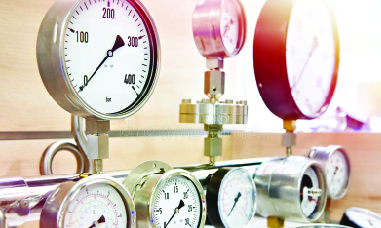
ABSTRACT: El curso de medición de presión ofrece una comprensión integral de los principios fundamentales, métodos y tecnologías asociadas con la medición precisa de la presión en diversos entornos industriales. Este curso abarca desde los conceptos básicos de presión y sus unidades de medida hasta el funcionamiento de los distintos tipos de sensores y transductores utilizados para capturar y registrar mediciones de presión.
OBJETIVOS: Los participantes adquieren conocimientos sobre la selección adecuada de instrumentos de medición de presión según las aplicaciones específicas, incluyendo manómetros, transmisores de presión, barómetros, y otros dispositivos disponibles en el mercado. Se profundiza en los principios de funcionamiento de cada tecnología, sus ventajas, limitaciones y consideraciones de calibración. Además, el curso explora las normativas y estándares relevantes en la industria de la medición de presión, como la ISO 17025, que establece los requisitos para la competencia de laboratorios de calibración y ensayo. Se enfoca en las buenas prácticas de medición, la precisión, la incertidumbre y la trazabilidad para asegurar mediciones confiables y precisas.
DIRIGIDO A: Este curso está destinado a todos aquellos que se desempeñan o se relacionan con tareas técnicas, comerciales o bien están dando sus primeros pasos en la industria de instrumentación y control de proceso, con foco en la medición y control de presión (técnicos, supervisores, ingenieros, personal de operación y mantenimiento, gerentes técnicos, vendedores técnicos, entre otras posiciones).
Ing. Rodrigo Hernández 12 de abril de 2024, 18:00hs
En este webinar el Ing. Rodrigo explicara todo lo que abarcara el curso completo de LoRaWAN, el cual provee los conocimientos necesarios para planificar e implementar sistemas IoT que utilizan la tecnología LoRaWAN.
El curso está compuesto por 5 módulos: 1) Fundamentos de LoRaWAN, 2) Dispositivos y componentes, 3) Configuración y despliegue, 4) Protocolos y stack tecnológico y 5) Tendencias y casos de uso.
Esta formación ofrece un marco teórico completo para comprender el funcionamiento de los sistemas LoRaWAN. Por otro lado, las clases tienen un fuerte componente práctico. Durante el curso veremos cómo configurar gateways y dispositivos reales y cómo obtener y procesar datos en vivo.
Además, aprenderemos sobre buenas prácticas de uso de la tecnología, planificación, gestión de la infraestructura y resolución de problemas comunes.
Los objetivos son:
Tener un conocimiento general de las soluciones LoRaWAN.
Poder planificar, implementar y gestionar sistemas LoRaWAN en cualquier ámbito de aplicación.
Crear sistemas IoT basados en la tecnología LoRaWAN.
Tener la capacidad de resolver problemas asociados a la implementación de sistemas LoRaWAN.
Ing. Osvaldo Ortega 17 de Abril de 2024 de 17:00 a 20:00 hs
ABSTRACT: El curso de medición de caudal ofrece un enfoque exhaustivo sobre los principios, técnicas y tecnologías utilizadas para medir con precisión el flujo de líquidos y gases en entornos industriales y de transferencia en custodia. Durante el curso, se cubren los conceptos fundamentales del flujo, las unidades de medida relevantes y se exploran en detalle los diferentes tipos de medidores de caudal disponibles, como medidores de desplazamiento positivo, ultrasónicos, electromagnéticos, medidores Coriolis, entre otros. Se profundiza en los principios de funcionamiento de cada tipo de medidor, sus ventajas, limitaciones y aplicaciones específicas en entornos de proceso y transferencia en custodia.
OBJETIVOS: Los participantes adquieren conocimientos sobre la selección adecuada de medidores de caudal según las características del fluido, las condiciones del proceso y los estándares de la industria. Se enfatiza la importancia de cumplir con normativas como la ISO 17025 para la calibración de medidores de flujo y otros estándares relevantes para asegurar mediciones precisas y confiables. Además, el curso aborda las prácticas de mantenimiento, calibración y verificación de los instrumentos de medición de caudal para garantizar su precisión a lo largo del tiempo
DIRIGIDO A: Este curso está destinado a todos aquellos que se desempeñan o se relacionan con tareas técnicas, comerciales o bien están dando sus primeros pasos en la industria de instrumentación y control de proceso, con foco en la medición y control de caudal (técnicos, supervisores, ingenieros, personal de operación y mantenimiento, gerentes técnicos, vendedores técnicos, entre otras posiciones).
Esp. Ciro Romero 24 de abril, 8, 15 y 22 de mayo de 2024 de 18:00 a 21:00hs
ABSTRACT: A partir de octubre de 2021 Python es el lenguaje más popular, delante de Java y C. Según investigaciones recientes, los lenguajes de secuencias de comandos, como Python, son más productivos que los lenguajes convencionales, como los mencionados anteriormente. Su mayor fortaleza se encuentra en la resolución de problemas de programación que implican la manipulación de cadenas y la búsqueda en un diccionario.
Está comprobado que el consumo de memoria es mejor que el de Java y levemente inferior al de C/C++. Según la propia comunidad de desarrolladores Python es un lenguaje de “baterías incluidas” debido a su completa biblioteca estándar que permite flexibilidad al momento de desarrollar soluciones.
OBJETIVOS: aprender y utilizar el lenguaje de alto nivel para la implementación de software, extrapolando nociones de programación a la sintaxis de lenguaje.
DIRIGIDO A: profesionales de la industria, estudiantes y público general con conocimiento básicos de informática
Ing. Abel Andrada 25 de abril de 2024 de 17:00 a 20:00 hs
ABSTRACT: Temperatura y calor. Escalas de temperatura. Transferencia de calor. Calor especifico. Termometría. Instrumentos para la medición de la temperatura. Clasificación en función del principio general de funcionamiento: eléctricos, radiación térmica, expansión térmica y visuales. Características estáticas y dinámicas de los instrumentos en general. Calibración. La PT100, tipos y características. Esquemas de conexionado. Medición y control de temperatura mediante controladores electrónicos industriales y controladores lógicos programables. Las actividades se complementarán con resolución de ejercicios y lectura y comprensión de las especificaciones de los fabricantes de los diferentes dispositivos.
OBJETIVOS: Proporcionar herramientas básicas a los asistentes sobre las mejores prácticas en la medición y calibración de elementos e instrumentos de medición de temperatura con el fin de cumplir con estándares y requisitos de calidad en las mediciones.
DESTINADO A: Personal de planta: Ingeniería, Proyecto, Instalación y Mantenimiento, Servicios.
The European Space Agency (ESA)'s Φ-lab and the European Centre for Medium-Range Weather Forecasts
(ECMWF) are organising the 4th Workshop on Machine Learning for Earth System Observation and Prediction at ESA ESRIN, Italy, from 7th to 10th May (Tue- Fri) 2024. The registration and abstract submission are now open!
The workshop has 5 thematic areas:
ML4DestinE.
Multidomain ML4ESOP,
End-to-End ML4Weather and Climate Prediction,
Hybrid ML-NWP/Climate,
New Generation Computing for AI (HPC, edge, and quantum computing).
Important Dates:
Abstract Opening
December 2023
Abstract Closure
31st January 2024
Registration Open
December 2023
Registration Closure
April 2024
Notification of Acceptance
Late February 2024
Please see the ESA-ECMWF ML4ESOP website https://www.ml4esop.esa.int/ for complete submission instructions
and additional details.



 January 31st, 2024
  Daniela Lopez de Luise
  AIDA-COURSE-APPLICATION-FORM.docx
.jpg)
.jpg)