



|
CURSOS ON-LINE DE MAYO Y JUNIO Cursos y Webinars ofrecidos por AADECA para socios, estudiantes, docentes y profesionales del sector.
MAYO
JUNIO
|
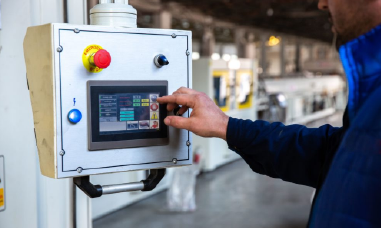
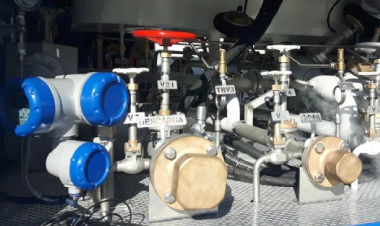
Cursos Especializados de PLC y HMI, Válvulas de Control, Caudal, Temperatura, Nivel / Protección Eléctrica de Sistemas de I&C
 May 24th, 2023
  Daniela Lopez de Luise










Ciclo de Conferencias – Encuentro 31/5 – La mujer en la ingeniería y la Empresa
May 23rd, 2023 Daniela Lopez de Luise Desde el Consejo Profesional de Ingeniería de Telecomunicaciones, Electrónica y Computación – Jurisdicción Nacional- Tenemos el agrado de invitarle a participar de un nuevo encuentro de nuestro tradicional Ciclo de Conferencias.
En esta oportunidad, la charla titulada “La mujer en la Ingeniería y la Empresa” estará a cargo de Irini Wentinck, presidenta de la comisión de genero y diversidad de la Unión Industrial Argentina (UIA).
El encuentro será de forma virtual a través de la plataforma zoom el día 31 de Mayo, a las 18 hs.
Mas información e inscripción: https://www.eventbrite.com.ar/e/evento-copitec-tickets-637379698837?fbclid=IwAR3Zmv30tIldLWnxK4YeEpbwnzwBDjICVUf04V2s_y67sqiavXz35G_vw_Q
¡Esperamos poder contar con su inestimable presencia!
Saludos cordiales
Alan R. Garcia
Director
Relaciones y Actividades Institucionales
COPITEC
 |
Libre de virus.www.avg.com |

BigDat 2023 Summer: early registration May 24
May 23rd, 2023 Daniela Lopez de Luise BigDat 2023 Summer
Las Palmas de Gran Canaria, Spain
July 17-21, 2023
https://bigdat.irdta.eu/2023su
***********************************************
Co-organized by:
University of Las Palmas de Gran Canaria
Institute for Research Development, Training and Advice – IRDTA
Brussels/London
***********************************************
Early registration: May 24, 2023
***********************************************
FRAMEWORK:
BigDat 2023 Summer is part of a multi-event called Deep&Big 2023 consisting also of DeepLearn 2023 Summer. BigDat 2023 Summer participants will have the opportunity to attend lectures in the program of DeepLearn 2023 Summer as well if they are interested.
SCOPE:
BigDat 2023 Summer will be a research training event with a global scope aiming at updating participants on the most recent advances in the critical and fast developing area of big data. Previous events were held in Tarragona, Bilbao, Bari, Timisoara, Cambridge and Ancona.
Big data is a broad field covering a large spectrum of current exciting research and industrial innovation with an extraordinary potential for a huge impact on scientific discoveries, health, engineering, business models, and society itself. Renowned academics and industry pioneers will lecture and share their views with the audience.
Most big data subareas will be displayed, namely foundations, infrastructure, management, search and mining, analytics, security and privacy, as well as applications to biology and medicine, business, finance, transportation, online social networks, etc. Major challenges of analytics, management and storage of big data will be identified through 14 four-hour and a half courses and 2 keynote lectures, which will tackle the most active and promising topics. The organizers are convinced that outstanding speakers will attract the brightest and most motivated students. Face to face interaction and networking will be main ingredients of the event. It will be also possible to fully participate in vivo remotely.
An open session will give participants the opportunity to present their own work in progress in 5 minutes. Moreover, there will be two special sessions with industrial and employment profiles.
ADDRESSED TO:
Graduate students, postgraduate students and industry practitioners will be typical profiles of participants. However, there are no formal pre-requisites for attendance in terms of academic degrees, so people less or more advanced in their career will be welcome as well. Since there will be a variety of levels, specific knowledge background may be assumed for some of the courses. Overall, BigDat 2023 Summer is addressed to students, researchers and practitioners who want to keep themselves updated about recent developments and future trends. All will surely find it fruitful to listen to and discuss with major researchers, industry leaders and innovators.
VENUE:
BigDat 2023 Summer will take place in Las Palmas de Gran Canaria, on the Atlantic Ocean, with a mild climate throughout the year, sandy beaches and a renowned carnival. The venue will be:
Institución Ferial de Canarias
Avenida de la Feria, 1
35012 Las Palmas de Gran Canaria
STRUCTURE:
2 courses will run in parallel during the whole event. Participants will be able to freely choose the courses they wish to attend as well as to move from one to another.
Also, if interested, participants will be able to attend courses developed in DeepLearn 2023 Summer, which will be held in parallel and at the same venue.
Full live online participation will be possible. The organizers highlight, however, the importance of face to face interaction and networking in this kind of research training event.
KEYNOTE SPEAKERS:
Valerie Daggett (University of Washington), Dynameomics: From Atomistic Simulations of All Protein Folds to the Discovery of a New Protein Structure to the Design of a Diagnostic Test for Alzheimer’s Disease
Sander Klous (University of Amsterdam), How to Audit an Analysis on a Federative Data Exchange
PROFESSORS AND COURSES:
Paolo Addesso (University of Salerno), [introductory/intermediate] Data Fusion for Remotely Sensed Data
Marcelo Bertalmío (Spanish National Research Council), [introductory] The Standard Model of Vision and Its Limitations: Implications for Imaging, Vision Science and Artificial Neural Networks
Gianluca Bontempi (Université Libre de Bruxelles), [intermediate/advanced] Big Data Analytics in Fraud Detection and Churn Prevention: from Prediction to Causal Inference
Altan Çakir (Istanbul Technical University), [introductory/intermediate] Introduction to Big Data with Apache Spark
Ian Fisk (Flatiron Institute), [introductory] Setting Up a Facility for Data Intensive Science Analysis
Ravi Kumar (Google), [intermediate/advanced] Differential Privacy
Wladek Minor (University of Virginia), [introductory/advanced] Big Data in Biomedical Sciences
José M.F. Moura (Carnegie Mellon University), [introductory/intermediate] Graph Signal Processing and Geometric Learning
Panos Pardalos (University of Florida), [intermediate/advanced] Data Analytics for Massive Networks
Ramesh Sharda (Oklahoma State University), [introductory/intermediate] Network-Based Health Analytics
Steven Skiena (Stony Brook University), [introductory/intermediate] Word and Graph Embeddings for Machine Learning
Mayte Suarez-Farinas (Icahn School of Medicine at Mount Sinai), [intermediate] Meta-Analysis Methods for High-Dimensional Data
Ana Trisovic (Harvard University), [introductory/advanced] Principles, Statistical and Computational Tools for Reproducible Data Science
Sebastián Ventura (University of Córdoba), [intermediate] Supervised Descriptive Pattern Mining
OPEN SESSION:
An open session will collect 5-minute voluntary presentations of work in progress by participants. They should submit a half-page abstract containing the title, authors, and summary of the research to david@irdta.eu by July 9, 2023.
INDUSTRIAL SESSION:
A session will be devoted to 10-minute demonstrations of practical applications of big data in industry. Companies interested in contributing are welcome to submit a 1-page abstract containing the program of the demonstration and the logistics needed. People in charge of the demonstration must register for the event. Expressions of interest have to be submitted to david@irdta.eu by July 9, 2023.
EMPLOYER SESSION:
Organizations searching for personnel well skilled in big data will have a space reserved for one-to-one contacts. It is recommended to produce a 1-page .pdf leaflet with a brief description of the organization and the profiles looked for to be circulated among the participants prior to the event. People in charge of the search must register for the event. Expressions of interest have to be submitted to david@irdta.eu by July 9, 2023.
ORGANIZING COMMITTEE:
Aridane González González (Las Palmas de Gran Canaria)
Marisol Izquierdo (Las Palmas de Gran Canaria, local chair)
Carlos Martín-Vide (Tarragona, program chair)
Sara Morales (Brussels)
David Silva (London, organization chair)
REGISTRATION:
It has to be done at
https://bigdat.irdta.eu/2023su/registration/
The selection of 8 courses requested in the registration template is only tentative and non-binding. For the sake of organization, it will be helpful to have an estimation of the respective demand for each course. During the event, participants will be free to attend the courses they wish as well as eventually courses in DeepLearn 2023 Summer.
Since the capacity of the venue is limited, registration requests will be processed on a first come first served basis. The registration period will be closed and the on-line registration tool disabled when the capacity of the venue will have got exhausted. It is highly recommended to register prior to the event.
FEES:
Fees comprise access to all courses and lunches. There are several early registration deadlines. Fees depend on the registration deadline.
The fees for on site and for online participation are the same.
ACCOMMODATION:
Accommodation suggestions are available at
https://bigdat.irdta.eu/2023su/accommodation/
CERTIFICATE:
A certificate of successful participation in the event will be delivered indicating the number of hours of lectures.
QUESTIONS AND FURTHER INFORMATION:
ACKNOWLEDGMENTS:
Cabildo de Gran Canaria
Universidad de Las Palmas de Gran Canaria – Fundación Parque Científico Tecnológico
Universitat Rovira i Virgili
Institute for Research Development, Training and Advice – IRDTA, Brussels/London
Call for Special Session Proposals
May 23rd, 2023 Daniela Lopez de Luise The IJCB 2023 technical program will highlight a limited number of
Special Sessions in order to complement the regular program with new or
emerging topics of particular interest to the Biometrics community.
Prospective organizers of Special Sessions should submit proposals with
the following information:
+ Special session title
+ A clear description/list of the addressed topic and the topics that
fall within its scope
+ A description of the significance and novelty of the topic and the
rationale for the proposed session including any possible
interdisciplinary aspects. This should also include an answer to the
question: why the topic of the special session should be considered in a
separate combined session rather than the main track of the conference?
+ Names, affiliations, and a short biography of the organizers
highlighting their expertise in the topic of the Special Session
(relative publications list is encouraged)
+ A list of research groups currently active in that area and potential
contributors
+ List of up to six (6) potential contributed papers (including titles,
authors, the contact information of the corresponding author, and a
short abstract) (if available)
Upon acceptance of the special session proposal, the call for papers for
the special sessions will be publicized via the IJCB 2023 website and
mailing lists. The contributed papers will be submitted in the same
format as regular papers. Organizers should not contribute more than one
paper. Proposals will be evaluated based on the timeliness of the topic
and on the qualifications of the organizers. The papers in each accepted
Special Session will undergo a review process, similar to the process
for regular papers.
*** Deadlines ***
Special Session Proposals due: May 27, 2023
Notification of acceptance of the Special Sessions: June 10, 2023
Special session paper submission deadline: July 17, 2023 (recommended)
*** Contact ***
Proposals and inquiries should be sent via e-mail as a PDF attachment to
the Special Sessions chair:
Naser Damer, Fraunhofer IGD (Darmstadt, Germany)
(naser.damer@igd.fraunhofer.de)
Conference website: https://ijcb2023.ieee-biometrics.org/