Second International Workshop on Computational Machine Ethics (CME 2023)

;text-indent:0px;text-transform:none;white-space:normal;word-spacing:0px;text-decoration:none”>


Held in conjunction with KR 2023
Half day, 2-4 Sep 2023 (TBD) 


Call for Papers

Overview

The 2nd Computational Machine Ethics (CME) Workshop will be held in conjunction with the 20th International Conference on Principles of Knowledge Representation and Reasoning (KR 2023). It will provide a forum for discussing recent research on methodological development in machine ethics and its impact on human societies. With the successful development of cognitive machines in a diverse range of application scenarios, there is an urgent need to enable these machines to behave morally following the behavioural norms and ethical principles established in human societies. Machine ethics is thus a subfield of AI ethics concerned with implementing moral and ethical behaviours in cognitive machines, i.e., to develop computational approaches to ensure ethical consideration in AI applications. In this way, cognitive machines will be adequately equipped with the moral and ethical competence to prevent physical, emotional or psychological harm and to maximise the benefits they can provide to society. In recent years various approaches have been developed, which can generally be categorised into logic-based formulations, learning-based methods and hybrid models. Nevertheless, compared to the extensive discussion in the press regarding the dangers of AI and rapid development of frameworks for regulating the ethical use of AI, machine ethics remains a relatively less explored field. In particular, how to represent ethical principles and reason about the best course of action for real-life scenarios in a generalisable way largely remains an open question. 
Continuing from the 1st CME Workshop that was held in conjunction with KR 2021, the 2nd CME workshop aims to provide a forum for researchers from academia and industry to exchange ideas and techniques in the area of machine ethics, to generate new ideas in the intersection of knowledge representation and reasoning and machine/deep learning, to promote widespread awareness of machine ethics in the AI community as well as identifying new research directions in the area. Besides regular research papers, we also welcome vision papers, demonstration papers and papers showcasing industry applications.

Topics of interest include but are not limited to:

  • Computational modelling of morality and ethics
  • Explicit and implicit ethical agents
  • Logic-based approaches to machine ethics
  • Knowledge representation of ethical principles
  • Machine learning-based approaches to machine ethics
  • Natural language processing for descriptive ethics
  • Integration of symbolic and sub-symbolic models
  • Commonsense reasoning and its application to machine ethics
  • Explainability of ethical reasoning
  • Formal verification of machine ethics
  • Development of machine ethics in cognitive robot programs
  • Robot learning for ethical reasoning
Organising Committee

  • Maurice Pagnucco, UNSW, Australia
  • Yang Song, UNSW, Australia
  • Louise Dennis, University of Manchester, UK

Program Committee

  • Michael Anderson, University of Hartford, USA
  • Jean-Gabriel Ganascia, Sorbonne University, France
  • Randy Goebel, University of Alberta, Canada
  • Gerhard Lakemeyer, RWTH Aachen, Germany
  • Beishui Liao, Zhejiang University, China
  • Emiliano Lorini, University Paul Sabatier, France
  • Katina Michael, Arizona State University, USA
  • Vivek Nallur, University College Dublin, Ireland
  • Abhaya Nayak, Macquarie University, Australia
  • Ken Satoh, National Institute of Informatics, Japan
  • Leon van der Torre, University of Luxembourg, Luxembourg

Important Dates

Paper submission: 31 May 2023

Paper notification: 4 July 2023

Workshop date and time: 2-4 Sep 2023 (TBD)

Submissions

We welcome and encourage the submission of original, previously unpublished research and also have a recently published research track, similarly to the main conference of KR 2023. Submissions should be 3-6 pages (including figures, references, etc.) and formatted according to the KR 2023 guidelines. Submission is now open in EasyChair: https://easychair.org/my/conference?conf=kr2023, as a special track under KR 2023. 
__
Professor Maurice Pagnucco
Deputy Dean (Education), UNSW Engineering
Deputy Director, Creative Robotics Laboratory
PLuS Alliance Fellow
Professorial Fellow, UNSW iCinema Centre for Interactive Cinema Research


Dean’s Unit, Faculty of Engineering
Level 6, Building K17
UNSW SYDNEY 2052


T: 02 9385 5000
M: +61 (0)438 667746
Executive Assistant: Rachel Lewis E: rachel.lewis@unsw.edu.au


unknown.jpg


CRICOS Provider Code 00098G


UNSW is located on the unceded territory of the Bedegal (Kensington campus), 
Gadigal (City and Paddington Campuses) and Ngunnawal peoples (UNSW Canberra) 
who are the Traditional Owners of the lands where each campus of UNSW is situated.

Read More »

Shape In Medical Imaging (workshop in conjunction with MICCAI 2023)

May 9th, 2023 Daniela Lopez de Luise
Dear all,
I would like to bring to your attention the ” Shape
in Medical Imaging (ShapeMI)” workshop, which is to be held in conjunction with the
MICCAI 2023 conference.
Best regards,
Jianning Li


________________________________


MICCAI SHAPEMI
Workshop on Shape in Medical Imaging
Vancouver, Canada, Oct. 8th, 2023


________________________________


(*) Description


We gladly announce the workshop for Shape in Medical Imaging
(SHAPEMI, https://shapemi.github.io/) to be held in conjunction with the
conference on MICCAI – Medical Image Computing and Computer Assisted
Interventions, in Vancouver, Canada, Oct. 8th, 2023.


(*) Aim and Scope


Shape and geometry processing methods are receiving increased
attention, notably, in medical imaging.This workshop provide a presentation 
venue for researchers working in shape and geometrical analysis, such as 
shape modeling, geometric learning and statistics. This year’s edition also
brings a focus on applications. Original contributions as well as well as
exciting applications in medical imaging involving shapes are sought in the form of:


12-15 page full  papers
6-11  page short papers


in LNCS style. Accepted papers will be presented at ShapeMI 2023 in the form
 of posters or oral presentations. Every accepted paper can include a live demo.


(*) Targets topics include, but are not limited to:


Shape Processing and Analysis
Shape Learning and Classification
Geometric Learning and Manifold-based Methods
Statistics of Shapes and Deformations
Spectral Shape Analysis
Spectral Clustering and Dimensionality Reduction
Shape Modeling and Representation
Shape Segmentation, Registration and Correspondence
Geometry-constrained Deep Learning and Optimization
Statistical Shape Modeling 
Synthetic Anatomical Shape Generation
Generative Shape Models
Longitudinal Shape Analysis and Processing
Medical Applications focused on Shape Analysis
Evaluation / quality assessment of shape models
Relevant demos of freely available shape analysis software


(*) This years’  keynote speakers  include:


Prof. Miaomiao Zhang, University of Virginia
Prof. Steve pizer, University of North Carolina at Chapel Hill


This workshop will provide an invaluable opportunity for researchers
to present recent work on shape analysis in medical imaging.
Interactions among fellow researchers will foster a deeper
understanding of the underlying concepts and will provide insights on
medical imaging applications.


Best Paper Award Sponsored by Kitware.


** IMPORTANT DATES (Tentative) **


Deadline for paper submission: ** June 30th, 2023, 23:59 PST **
Notification of Acceptance: July, 2023 
MICCAI Early bird registration: August, 2023
SHAPEMI Workshop on: Oct. 8th, 2023


For more information:


Inquiries at:


Call for Papers for the International Journal of Data Warehousing and Mining (IJDWM)

May 9th, 2023 Daniela Lopez de Luise


CALL FOR SUBMISSIONS

International Journal of Data Warehousing and Mining (IJDWM)

– Gold Open Access Journal –


Editor-in-Chief:

Dr. Dr. David Taniar (Monash University, Australia)


Indexed In:

Web of Science SCIE, INSPEC, SCOPUS, & 22+ additional indices


Published: Continuous Volume by IGI Global, USA

Established: 2005

ISSN: 1548-3924|EISSN: 1548-3932|DOI: 10.4018/IJDWM


Your Manuscript

IconDescription automatically generatedArticle Processing Charge (APC)

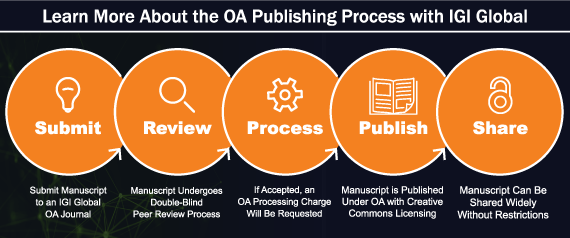
Papers are published under Creative Commons licensing and are freely accessible worldwide; therefore, there is an APC required to cover publishing costs (which replaces revenue generated from traditional subscriptions). Learn more about APCs, creative commons licensing, and funding resources.


Important Educational Resources About Open Access Publishing:


Exposing Common Misconceptions About Open Access Publishing

Read More>

Article Processing Charges:

What They Are and Why They Exist Read More>

Hear Perspectives About OA Publishing From Researchers Around the World Read More>


IJDWM a featured IGI Global Core Journal Title, disseminates the latest international research findings in the areas of data management and analyzation. This journal is a forum for state-of-the-art developments, research, and current innovative activities focusing on the integration between the fields of data warehousing and data mining. Learn more here.


Currently Seeking Submissions in the Following Research Areas, Among Other Topics Covered

by This Journal: 

  • Big Data Processing
  • Business Intelligence
  • Data Cleaning, Preparation, and Transformation
  • Data Lake
  • Data Linkage and Fusion


About the Editor:

David Taniar

International Journal of Data Warehousing and Mining (IJDWM)

Editor-in-Chief


Dr. David Taniar

Monash University, Australia

View Biography


Review Some of the Most Recently Published IJDWM Articles (Free Full-Text Access):

By Profs. Qiliang Zhu (North China University of Water Resources and Electric Power, China), Wenhao Ding (North China University of Water Resources and Electric Power, China), et al.

By Profs. Ge Zhang (Henan University, China) and Zubin Ning (Institute of Henan Huagong Technology, China)

By Profs. Man Jiang (Harbin Engineering University, China), Qilong Han (Harbin Engineering Unviversity, China), et al.


Browse More Published Open Access Content in IJDWM


LogoDescription automatically generated with medium confidence

Your Manuscript


Chart, diagram, textDescription automatically generated

Benefits of Open Access:


Higher Usage: Open access papers are 2-3 times more likely to be read than non-open access papers.


Higher Download Rates: Open access papers benefit from 89% higher download rates than non-open access papers.


Higher Citation Rates: Open access papers are 47% more likely to be cited than non-open access papers.


Why Should You Publish Open Access With IGI Global?

  • 175+ Highly Indexed Journals to Choose From (including IJDWM)
  • Easily Track Your Work in IGI Global’s Advanced Manuscript Submission System with Rapid Turnaround Times
  • Double-Blind Peer Review by Notable Editorial Boards (Committee on Publication Ethics (COPE) Certified)
  • Publications Adhere to All Current OA Mandates & Compliances

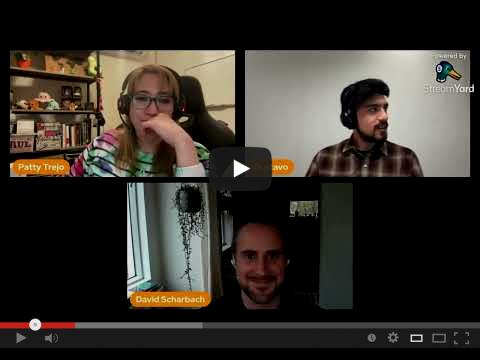
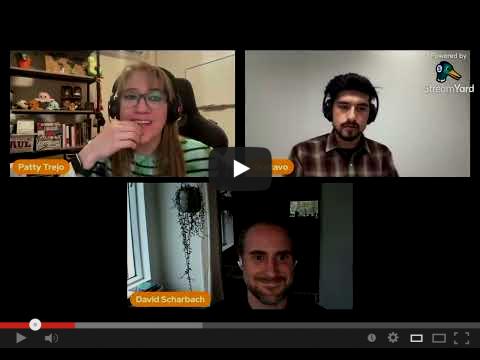
IMPULSE AI 2023: Charla con Patty Trejo y Gustavo Prudencio

May 8th, 2023 Daniela Lopez de Luise
“>

💡Los consejos más valiosos💡
de Patty Trejo y Gustavo Prudencio en el mundo de la IA


¡Es un placer compartir con ustedes los mejores momentos del último stream que tuvimos con Patty Trejo y Gustavo Prudencio! En este stream, se hablaron sobre varios temas relacionados con la inteligencia artificial, incluyendo la recomendación, validación y pruebas A/B, y el manejo de modelos.

Patty Trejo y Gustavo Prudencio, Directora de Ingeniería y Director de Ciencia Aplicada en Corner shop y Uber hablaron sobre cómo desarrollar e implementar una estrategia de ciencia de datos que se alinee con los objetivos comerciales generales de la organización.

📌 En el stream, Patty y Gustavo compartieron consejos y discutieron los desafíos de implementar sistemas de recomendación, asegurar la precisión de los modelos con validación y pruebas A/B, y manejar modelos de IA de manera eficiente.
Te dejamos algunas de las preguntas y consejos mas importantes de los que se discutieron:

💡Te dejamos algunas de las preguntas y consejos mas importantes de los que se discutieron:


MANEJO DE MODELOS:

¿Puede describir su experiencia con el control de versiones para modelos de aprendizaje automático?


¿Cómo realiza un seguimiento de los cambios en sus modelos y qué herramientas utiliza para hacerlo?


Cómo maneja la degradación del rendimiento del modelo y qué medidas toma para abordarla?


RECOMENDACIONES

¿Cómo maneja el problema de inicio en frío, donde no hay suficientes datos sobre un nuevo usuario o elemento para hacer recomendaciones significativas?

¿Cómo maneja situaciones en las que las preferencias de un usuario cambian con el tiempo y las recomendaciones deben actualizarse en consecuencia?


VALIDACION Y A/B TESTING:


¿Puede describir la diferencia entre validación y prueba y por qué ambas son importantes en el aprendizaje automático?


¿Puede dar un ejemplo de una prueba A/B exitosa que haya realizado en el pasado y qué conocimientos obtuvo de los resultados?

📌En conclusión, el último stream con Patty Trejo y Gustavo Prudencio fue una excelente oportunidad para aprender de dos expertos en el campo de la inteligencia artificial y el desarrollo de software. Los temas tratados, incluyendo la recomendación, validación y pruebas A/B y manejo de modelos son cruciales para cualquier organización que busque implementar tecnología de IA con éxito.

En definitiva, la conversación fue una valiosa oportunidad para aprender sobre el estado actual de la IA en el mundo empresarial, así como para descubrir cómo las organizaciones pueden utilizar prácticas efectivas para garantizar el éxito de sus proyectos de IA.

Si te perdiste el evento, no te preocupes, puedes verlo aquí.


Impulse AI es organizado por Latam AI, una colaboración con The Toronto Machine Learning Society (TMLS) y MLOps World diseñada para ayudar a unir y apoyar el ecosistema de Latam AI.

Esto con la intención de empoderar a sus miembros e impulsar la investigación y las aplicaciones empresariales de la IA en un escenario global, LATAM AI está reimaginando lo que significa tener una comunidad conectada. Así mismo ofreciendo apoyo, crecimiento, inclusión para todos los miembros y colaboraciones únicas entre varias comunidades académicas e industriales.

Para obtener más información sobre lo que hacemos haga click aquí.

Read More »

NUEVA DIPLOMATURA 100% ONLINE

May 5th, 2023 Daniela Lopez de Luise
;background-color:rgb(246,251,255);word-break:break-word”>

EL INSTITUTO DE ENERGÍA ELÉCTRICA (IEE), UNSJ-CONICET

 Los invita a ser parte de la nueva Diplomatura 100% a distancia:

flyer diplomatura-1 - copia.jpg

                                         
                                        MÁS INFORMACIÓN

Alternate text

Profesores responsables

Dr. Ing. Mauricio Samper

Dr. Ing. Rodolfo Reta

Ing. Gustavo Barón

Alternate text

Inicia

1 de agosto del 2023.

Alternate text

Modalidad

100% a distancia.

Read More »
Design by 2b Consult