



ABRIÓ LA CONVOCATORIA PARA LAS BECAS DAAD 2023
 July 26th, 2022
  Daniela Lopez de Luise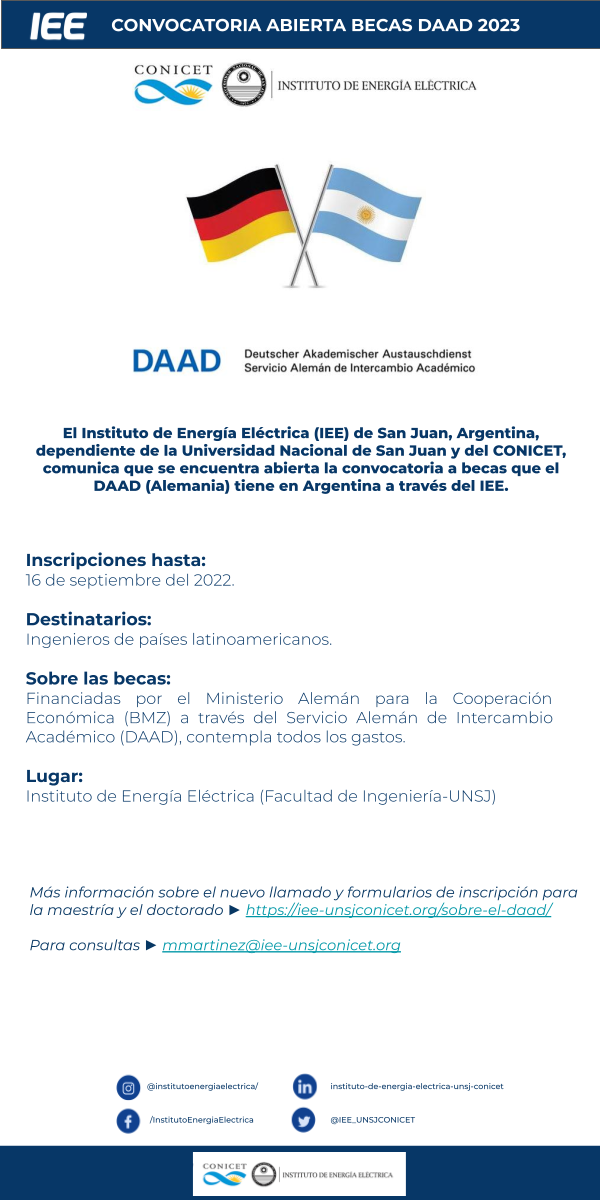
Invitación I SIILMI Primer Simposio de Investigación e Innovación Latinoamericano Mujeres en Ingeniería
July 26th, 2022 Daniela Lopez de Luise Este evento busca generar un espacio de comunicación y construcción del conocimiento de investigaciones e innovaciones que aborden estrategias para lograr la igualdad de derechos, oportunidades y espacios de las mujeres en el ámbito académico y profesional de las ingenierías, y propendan por el fomento de las vocaciones por la ingeniería en las niñas y las jóvenes de Latinoamérica y el Caribe.
Eje 1: Igualdad de derechos, oportunidades y espacio de las mujeres en el ámbito académico, en LATAM y el Caribe
Eje 2: Igualdad de derechos, oportunidades y espacio de las mujeres en el ámbito profesional, en LATAM y el Caribe
Eje 3: Fomento de las vocaciones por la ingeniería en niñas, en LATAM y el Caribe
Eje 4: Fomento de las vocaciones por la ingeniería en jóvenes, en LATAM y el Caribe
Convocamos a la presentación de Trabajos de Investigación e Innovación originales y en idioma español o portugués, empleando la plantilla que obra en el sitio web del Simposio.
Recepción de trabajos: hasta el 31 de agosto 2022.
Más información en el sitio web del I SIILMI: https://www.siilmi-catedramatilda.com/
4th International Conference ICCCES 2022 – Proceedings by Springer LNEE Invitation: 15-16 September 2022, Tamil Nadu, India.
July 22nd, 2022 Daniela Lopez de Luise |
|


| Dear Researcher
With a consecutive success of ICCCES conference series with Springer publications. The 4th successive conference event has been announed recently. The Due to COVID-19, Virtual Paper Presentation is also Acceptable
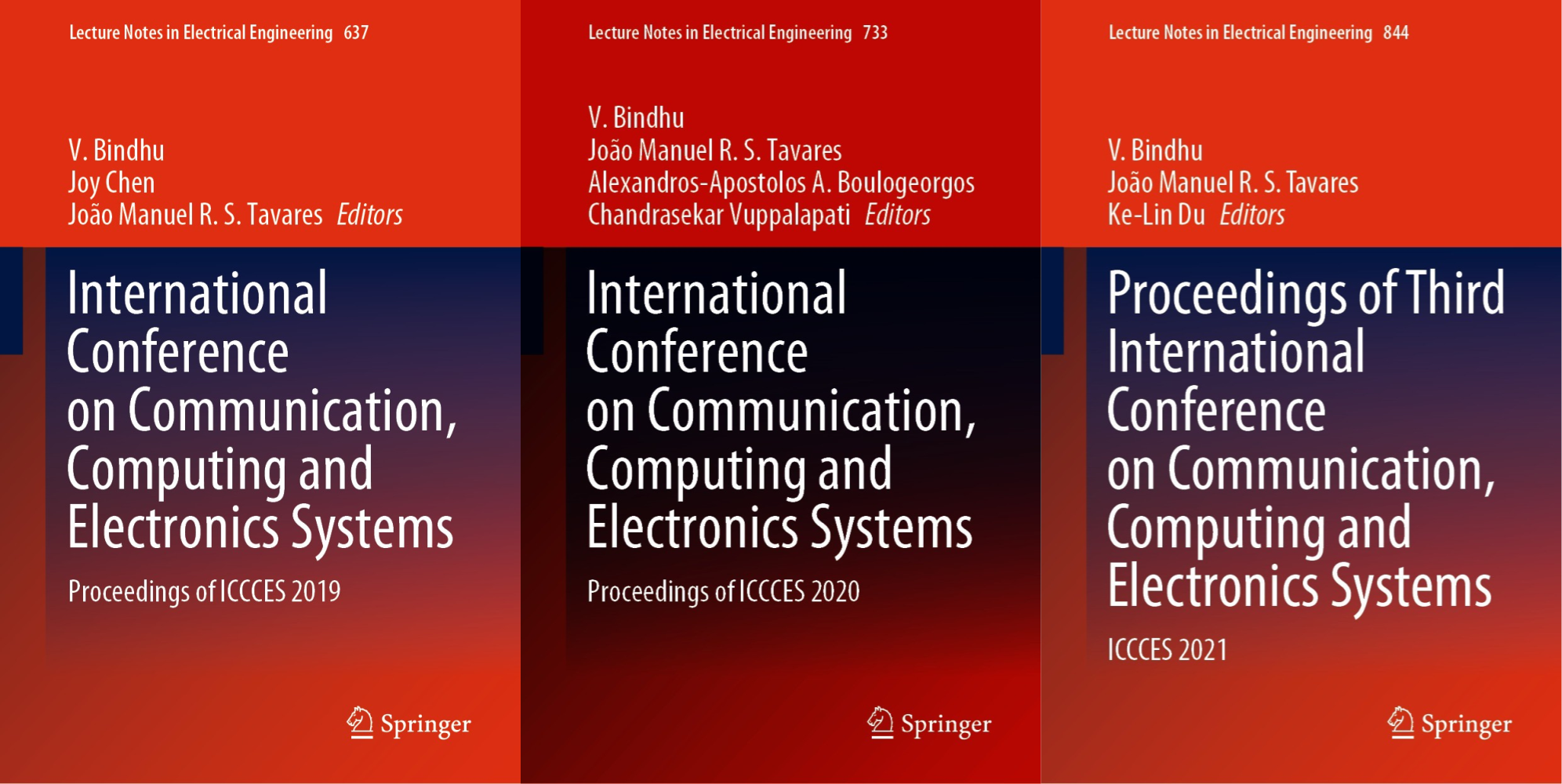
To visit 4th ICCCES 2022 Conferenence Website: Click Here ISSN: 1876-1119 https://www.springer.com/series/7818 Indexing: The books of this series are submitted to SCOPUS, INSPEC, DBLP, Ei-Compendex, WTI Frankfurt eG, zbMATH, SCImago ICCCES Publications @ Springer LNEE ICCCES – 2021 Proceedings
|

Call for Paper ICSISCET 2022 Proceedings in Springer book series AIS | MITS Gwalior, India
July 21st, 2022 Daniela Lopez de Luise Greetings from MITS Gwalior and Soft Computing Research Society India.
We are pleased to inform you that Madhav Institute of Technology and Science, Gwalior, India in association with Soft Computing Research Society, New Delhi, India will organize the 4th International Conference on Sustainable and Innovative Solutions for Current Challenges in Engineering & Technology (ICSISCET 2022). The details of the ICSISCET 2022 are as follows:
Title of the conference:
4th International Conference on Sustainable and Innovative Solutions for Current Challenges in Engineering & Technology (ICSISCET 2022)Important Dates:
Notification of acceptance: October 25, 2022
Registration and final paper submission of accepted Paper: November 05, 2022
Charlas y Eventos durante la semana de la ECI – 25 al 29/7
July 20th, 2022 Daniela Lopez de Luise ECI 2022
Escuela de Ciencias Informáticas
25 al 29 de julio
********************************************************
Departamento de Computación
Facultad de Ciencias Exactas y Naturales
Universidad de Buenos Aires
http://www.dc.uba.ar/eci
********************************************************
Del 25 al 29 de julio se llevará a cabo en modalidad PRESENCIAL la 35º edición de la Escuela de Ciencias Informáticas, ECI 2022, organizada por el Departamento de Computación de la Facultad de Ciencias Exactas y Naturales de la Universidad de Buenos Aires.
A continuación les detallamos el Programa de charlas y eventos, libres y gratuitos, los cuales no requieren inscripción previa:
Lunes 25 de julio
17 a 17:30 Ceremonia de Apertura de la ECI
Martes 26 de julio
12:30 a 13 Charla de la Maestría en Ciencia de Datos-UBA: “Maestría en Cs. de Datos: Un enfoque profundo e interdisciplinario para el desarrollo de tu posgrado”. Juan E. Kamienkowski, Director.
13 a 13:30 Charla de investigación “Un enfoque epistémico para modelar incertidumbre en data-graphs”. Nina Pardal, Grupo de Lógica y Computabilidad.
16:30 a 16:55 Charla de Salesforce “WebAssembly más allá del browser”. Andres Testi (Lead Member), Jorge Luis Perez (Tech Lead), Martin Leonardo Centurion (Software Engineer).
17 a 17:25 Charla de Qontigo “Agilidad en el mundo real: ¿Cómo ser prácticos sin abandonar toda esta Teoría?”. Emilio Platzer, Workflow Engineering Manager, Qontigo.
17:30 a 17:55 Charla de ASAPP “Innovación en IA para la eficiencia en atención al cliente”. Nicolás D'Ippolito, Head Engineering, ASAPP.
Miércoles 27 de julio
12:30 a 13 Charla de investigación “¿Te animás a auditar contratos inteligentes en la blockchain? Nosotros te ayudamos”. Diego Garbervetsky, Laboratorio de Fundamentos y Herramientas de Ingeniería de Software.
16:30 a 16:55 Charla de AlixPartners: “¿Tienen valor los datos de una empresa nativa digital?”. Andrei Rukavina, Director, AlixPartners.
17 a 17:25 Charla de Dialpad “Ingeniería de datos en tiempo real”. Leandro Nahabedian y Alicia Herrada (Ingenieros de Datos, Dialpad).
17:30 a 18
– Charla de Brubank: “Brubank: un banco pensado desde la tecnología”.
– Charla de Santander Tecnología
– Charla de BBVA: “BBVA: día a día apuntando más alto”
Jueves 28 de julio
12:30 a 13:30 Sesión de pósters de investigación del DC/ICC
16:30 a 16:55 Charla de Mercado Libre “Optimización Combinatoria a gran escala en MercadoLibre”. Daniel Negrotto, Software Development Sr. Expert, Mercado Libre.
17 a 17:25 Charla de Navent “¿Qué hacemos en Navent+QuintoAndar, el mayor ecosistema proptech de Latinoamérica?”. Rodolfo F. Gamarra, Director de Tecnología, Navent.
17:30 a 18
-Charla de Accenture: “Automatización de la evaluación de los agentes de experiencia del cliente con procesamiento natural del lenguaje”. Orador: Nicolás Garcia Aramouni, Data Science Associate Manager, Accenture.
-Charla de PedidosYa. Guido Mogni, Software Engineer Manager, PedidosYa.
-Charla de Mutt Data “Desafíos en la Construcción de Sistemas de Machine Learning”.
Viernes 29 de julio
12:30 a 13 Charla de la Fundación Sadosky. Fernando Schapachnik, Director Ejecutivo.
13 a 13:30 Charla de investigación “Ciencia de Datos para la educación: una experiencia en un curso masivo de programación en Argentina”. Manuela Cerdeiro, Laboratorio de Inteligencia Artificial Aplicada.
17 a 18
–Entrega de premios de la Competencia de Datos
-Ceremonia de Cierre de la ECI.
Martes 26 al jueves 28 de julio
Stands de las empresas auspiciantes de la ECI. Ver el listado de empresas e instituciones auspiciantes.
Agradecemos la difusión de este mensaje y les esperamos.
Vanina Martinez
Presidenta ECI 2022
Sergio Abriola
Vice-Presidente ECI 2022
E-mail: eci2022@dc.uba.ar
Web: http://www.dc.uba.ar/eci
Departamento de Computación
Facultad de Ciencias Exactas y Naturales
Universidad de Buenos Aires