



|
13 y 14 de Noviembre de 2024 Te invitamos a sumergirte en el mundo del control automático y descubrir las últimas tendencias que están transformando la industria. ¿Qué encontrarás en este encuentro único?
PROGRAMA COMPLETO AQUÍ ACREDITACIÓN GRATUITA ON-LINE!!! ¡No te quedes afuera!
|
¡Ya arranca el Encuentro Técnico-Industrial AADECA 2024!
 November 12th, 2024
  Daniela Lopez de Luise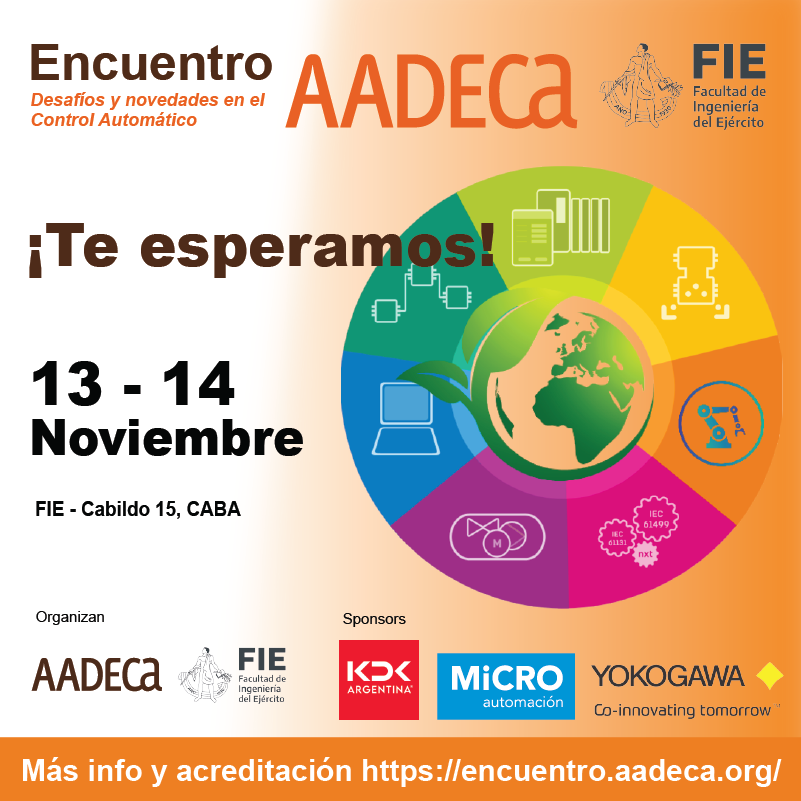
IEEE AR – BTS “Metaverso” (20/XI), APS TCAM Workshop (22/XI), YP Next Steps (30/XI), etc.
November 8th, 2024 Daniela Lopez de Luise If you are having trouble reading this message, click here for the web version.



– AADECA – Asociación Argentina de Control Automático
http://www.aadeca.org/
– SADIO – Sociedad Argentina de Informática
http://www.sadio.org.ar
Próximos cursos virtuales sincrónicos: Consultar programación en https://sadio.ar/academia-sadio/
|
|
IEEE AR e-Notice Información para socios IEEE de la Sección Argentina 07 de noviembre de 2024 |

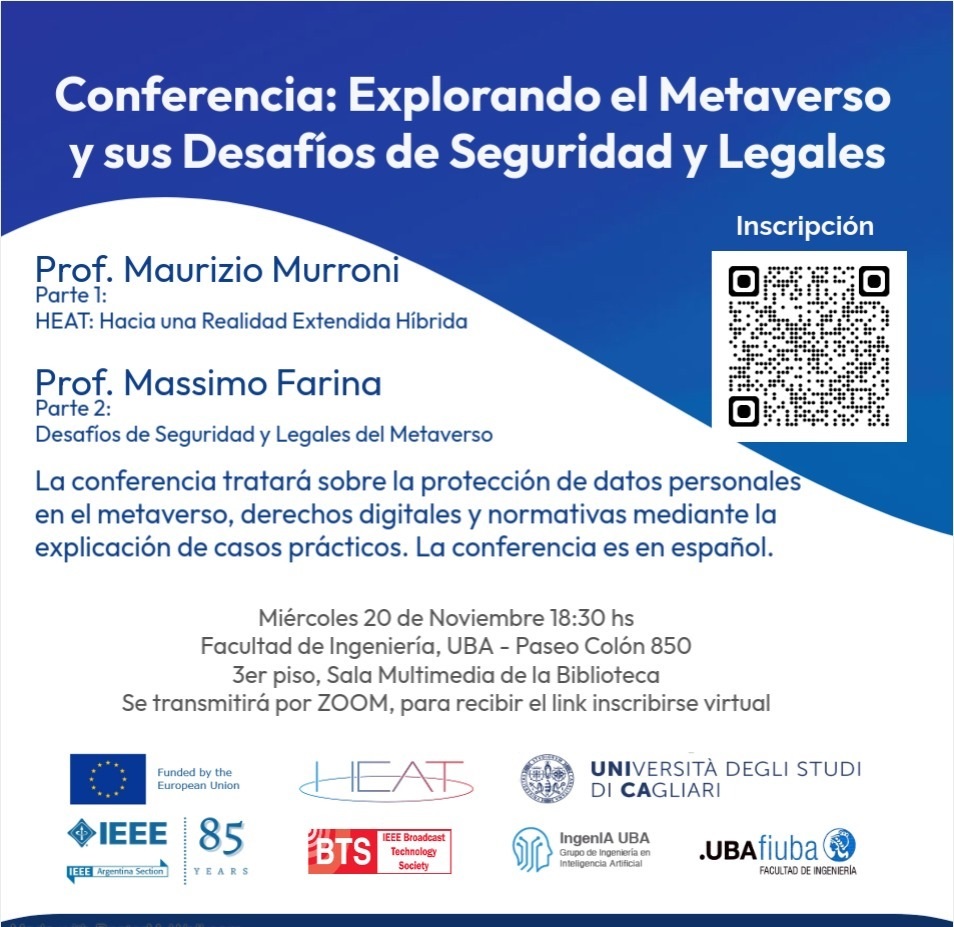
1. — IEEE AR – Conferencia “Explorando el Metaverso y sus desafíos de seguridad y legales”
Maurizio Murroni y Massimo Farina
Miércoles 20 de noviembre de 2024 – Presencial y virtual
2. — IEEE APS TCAM Technical Committee on Antenna Measurements
Workshop IEEE – INTI 2024
Jornada sobre Propagación y Medición de Antenas
Viernes 22 de noviembre de 2024 – Presencial en INTI y virtual
3. — IEEE AR YP – NEXT STEPS – Conectando talento con oportunidades
Sábado 30 de noviembre, UTN Facultad Regional Córdoba.
4. — UBA – Charla “Chatbots: Mitos y Prospectiva”
Daniela Lopez de Luise – Jueves 14 de noviembre de 2024 – Virtual
5. — III SIILMI – Tercer Simposio de Investigación e Innovación Latinoamericano Mujeres en Ingeniería
2 de diciembre de 2024 – Virtual
Inscripción hasta el 10 de noviembre de 2024
6. — IEEE – Asociación y renovación de membresía 2025
Descuentos promocionales para estudiantes de grado y posgrado
7. — Actividades de otras organizaciones profesionales y educativas
8. — Congresos y Exposiciones en Argentina y en la Región 9 del IEEE
1. — IEEE AR – Conferencia “Explorando el Metaverso y sus desafíos de seguridad y legales”
El Capítulo Argentino de la IEEE BTS, Broadcast Technology Society, invita a la conferencia “Explorando el Metaverso y sus desafíos de seguridad y legales”, que brindarán los profesores Maurizio Murroni y Massimo Farina el miércoles 20 de noviembre de 2024, en modo presencial y virtual.
La conferencia tratará sobre la protección de datos personales en el metaverso, derechos digitales y normativas, mediante la explicación de casos prácticos.
Los disertantes son docentes del Departamento de ingeniería eléctrica y electrónica de la Universidad de Cagliari, Italia, y serán Disertantes Invitados en el Congreso IEEE URUCON, a realizarse del 18 al 20 de noviembre de 2024 en Montevideo, Uruguay, organizado por la Sección Uruguay en su 35° aniversario.
La conferencia se dictará en forma presencial en la Facultad de Ingeniería de la UBA, Avda. Paseo Colón 850, 3er piso, Sala Multimedia de la Biblioteca, CABA y también se transmitirá por Zoom.
Todos los asistentes, presenciales y virtuales, se deben inscribir previamente a través del siguiente link:
Todos los asistentes, presenciales y virtuales, se deben inscribir previamente a través del siguiente link:
2. — IEEE APS TCAM Technical Committee on Antenna Measurements
Workshop IEEE – INTI 2024
Jornada sobre Propagación y Medición de Antenas
Este workshop es organizado en conjunto por el Instituto Nacional de Tecnología Industrial (INTI), el Comité Técnico de Mediciones de Antenas (TCAM) de la Sociedad de Antenas y Propagación de IEEE y el Capítulo Conjunto #2 Antennas and Propagation (APS) y Electromagnetic Compatibility (EMCS) de IEEE Argentina.
Fecha y lugar
Viernes 22 de noviembre de 2024, de 9 a 17 h
Auditorio – Parque Tecnológico Miguelete (PTM) – Instituto Nacional de Tecnología Industrial – INTI – Av. General Paz Nº 5445, San Martín, Buenos Aires
Modalidad presencial – virtual, con traducción simultánea de las conferencias.
Objetivos
Generar un espacio de encuentro para profesionales del sector de Antenas y Propagación, en el que se puedan compartir experiencias desde una perspectiva técnica y científica, promoviendo el intercambio, la formación y la actualización necesaria para el fortalecimiento del sector.
La jornada, abierta a todos los miembros del IEEE y al público especializado, contará con expertos internacionales y locales, muchos de los cuales son o han sido conferencistas distinguidos de la Sociedad de Antenas y Propagación del IEEE o de la Sociedad de Compatibilidad Electromagnética del IEEE.
Destinatarios
Profesionales y técnicos de empresas del sector, institutos de investigación y normalización, asociaciones y cámaras, universidades, proveedores de insumos y organismos públicos relacionados.
Evento gratuito, con inscripción previa y cupos limitados
Para inscribirse debe completar el siguiente formulario:
Fecha límite de inscripción: Martes 19 de noviembre de 2024
Información completa y programa del workshop: https://www.argentina.gob.ar/workshop-ieee-inti-2024
3. — IEEE AR YP – NEXT STEPS – Conectando talento con oportunidades
El Grupo de Afinidad IEEE Young Professionals (YP), y las Ramas Estudiantiles IEEE UNC y UTN FRC invitan a participar del evento NEXT STEPS 2024, que se realizará el sábado 30 de noviembre en la UTN Facultad Regional Córdoba.
NEXT STEPS es el evento ideal para estudiantes en su último año de carrera y jóvenes graduados, diseñado para vincularlos con empresas, instituciones académicas y referentes del ecosistema emprendedor.
A través de charlas inspiradoras, workshops y espacios de networking, los participantes podrán explorar opciones de carrera, interacctuar con empresas e instituciones académicas, conectar con reclutadores y potenciar su desarrollo profesional.
Fecha y horario: Sábado 30 de Noviembre de 2024, de 13:00 a 18:30 AR (UTC-3)
4. — UBA – Charla “Chatbots: Mitos y Prospectiva”
En el marco de la materia “Marco Legal, Ética y Privacidad” de la Especialización y Maestría en Seguridad informática de la UBA los invitamos a la charla virtual “Chatbots: Mitos y Prospectiva” que brindará Daniela López De Luise el jueves 14 de noviembre de 2024.
Resumen
Los asistentes virtuales constituyen una herramienta interesante que se ha puesto de moda para el público general.
Esta charla abarca cuestiones que son parte de los claroscuros que los envuelven. Entre otras cuestiones se presenta el problema de la información como contenido a transmitir, la relación con la Inteligencia Computacional, el mito de la inteligencia infinita, un caso y algunos consejos. Esencialmente se busca interactuar y despejar dudas que nunca se responden.
Disertante: Daniela López De Luise
Doctora en Ciencias informáticas por la UNLP y Dr. Honoris Causa UIETC.
Fundadora y directora de CI2S Lab, directora del laboratorio IDTI (UADER, Concepción del Uruguay, Entre Ríos), miembro de la Sociedad Científica Argentina (directivo en el Instituto de Comunicaciones Digitales), coordinadora académica del Centro de Estudios en Tecnologías Inteligentes de la Academia Nacional de Ciencias de Buenos Aires, coordinadora y miembro del Comité Directivo de la Red Internacional de Desarrollo y Producción de Videojuegos. Fundadora y miembro del comité directivo del Capitulo Argentino de la IEEE CIS Computational Intelligence Society, y miembro y líder del IEEE CIS Games Technical Committee Argentina.
Autora de publicaciones y directora de proyectos en varias universidades argentinas.
Fecha y hora: Jueves 14 de noviembre de 2024, 19:00 a 21:00 AR (UTC-3)
Modo: Virtual (plataforma Zoom) con inscripción previa.
La charla será grabada y puesta a disposición de aquellos que se hayan inscripto. Las personas que no deseen figurar con su imagen en la grabación podrán apagar sus cámaras.
Asimismo se compartirán con los inscriptos los materiales utilizados durante la charla.
Capacidad de la sala virtual: 100 participantes.
Consultas: gpataro@ieee.org
5. — III SIILMI – Tercer Simposio de Investigación e Innovación Latinoamericano Mujeres en Ingeniería
La Cátedra Abierta Latinoamericana Matilda y las Mujeres en Ingeniería le invitan a inscribirse como asistente antes del 10 de noviembre de 2024 al “III SIILMI, Tercer Simposio De Investigación E Innovación Latinoamericano Mujeres En Ingeniería“, a realizarse el lunes 2 de diciembre en modalidad virtual.
El evento es gratuito y hace parte de la Multiconferencia Internacional sobre Emprendimiento, Innovación y Desarrollo Regional (LEIRD 2024) de LACCEI. Se presentarán 40 trabajos aceptados de 146 autores. Además, tendremos 2 conferencias magistrales, 2 paneles de discusión, y 3 talleres. Revise la agenda en la página del SIILMI https://www.siilmi-catedramatilda.com/
@catedramatilda en Instagram y Twitter.
6. — IEEE – Asociación y renovación de membresía 2025
Ya es posible renovar o iniciar la membresía en IEEE para el año 2025.
Para nuevos socios se incluyen los meses restantes de 2024 sin cargo adicional.
Aranceles 2025
https://www.ieee.org/membership/join/dues.html
* U$S 174 – Full membership, Professional
* U$S 92 – eMembership, Professional
* U$S 27 – Graduate Student
* U$S 14 – Undergraduate Student
https://www.ieee.org/membership/join/dues.html
* U$S 174 – Full membership, Professional
* U$S 92 – eMembership, Professional
* U$S 27 – Graduate Student
* U$S 14 – Undergraduate Student
Renovación: http://www.ieee.org/renew
Nuevos socios: http://www.ieee.org/join
Estudiantes de grado y posgrado (StM, GSM):
– Para asociarse deben ingresar al sistema via “Join as a Student“.
– Todos los estudiantes, una vez ingresados al sistema, deben indicar si son estudiantes de grado (StM) o de posgrado (GSM).
Miembros vitalicios (Life Member, Life Senior, Life Fellow)
También deben 'renovar' su membresía por el mecanismo habitual para revistar como Socios Activos y gozar de los beneficios de la categoría.
El sistema factura a costo cero los ítems bonificados por ser miembros vitalicios.
Más información:
7. — Actividades de otras organizaciones educativas y profesionales
Consulte en los respectivos sitios web por actividades y otras novedades; en particular, fechas de cursos, congresos y presentación de trabajos e inscripción a las mismas.
Consulte por beneficios para socios IEEE, acorde con Convenios existentes.
Consulte por beneficios para socios IEEE, acorde con Convenios existentes.
– UTN BA – Actividades de extensión y de capacitación y propuestas culturales
La Secretaría de Cultura y Extensión Universitaria (SCEU) de la Facultad Regional Buenos Aires de la Universidad Tecnológica Nacional (UTN BA) ofrece una variedad de actividades (cursos, carreras cortas, posgrados, tecnicaturas, conferencias, talleres y más) sobre una amplia gama de temas, presenciales, semipresenciales y a distancia, así como Propuestas Culturales.
La oferta completa puede consultarse en https://sceu.frba.utn.edu.ar/
Contacto: info@sceu.frba.utn.edu.ar
La Secretaría de Cultura y Extensión Universitaria (SCEU) de la Facultad Regional Buenos Aires de la Universidad Tecnológica Nacional (UTN BA) ofrece una variedad de actividades (cursos, carreras cortas, posgrados, tecnicaturas, conferencias, talleres y más) sobre una amplia gama de temas, presenciales, semipresenciales y a distancia, así como Propuestas Culturales.
La oferta completa puede consultarse en https://sceu.frba.utn.edu.ar/
Contacto: info@sceu.frba.utn.edu.ar
– AADECA – Asociación Argentina de Control Automático
http://www.aadeca.org/
– ADEERA – Asociación de Distribuidores de Energía Eléctrica de la República Argentina
– CACIER – Comité Argentino de la Comisión de Integración Energética Regional
– CIER – Comisión de Integración Energética Regional
– CAI – Centro Argentino de Ingenieros
– COPITEC – Consejo Profesional de Ingeniería de Telecomunicaciones, Electrónica y Computación
– FUNDETEC – Fundación para el Desarrollo de las Telecomunicaciones, la Electrónica. y la Computación
Curso virtual “Redes móviles de nueva generación: Evolución de 4G y 5G, camino hacia 6G”
A partir del 12 de noviembre de 2024
– SADIO – Sociedad Argentina de Informática
http://www.sadio.org.ar
Próximos cursos virtuales sincrónicos: Consultar programación en https://sadio.ar/academia-sadio/
8. — Congresos y Exposiciones en Argentina y en la Región 9 del IEEE
* IEEE URUCON 2024 Hybrid Conference
18 al 20 de noviembre de 2024, en Montevideo, Uruguay
* INGEDEN 2024 – Congreso Internacional de Facultades de Ingeniería en la Gestión y Reducción de Riesgo de Desastres
20 al 22 de noviembre de 2024, Universidad Arturo Prat, Iquique (Chile)
* IEEE CONCAPAN Costa Rica 2024
27, 28 29 de noviembre de 2024, San José de Costa Rica
* LEIRD 2024 – LACCEI International Multiconference on Entrepreneurship, Innovation and Regional Development
“Creating solutions for a sustainable future: technology-based entrepreneurship”
December 2 – 4, 2024 – Virtual
* Khipu 2025 – Latin America Meeting in Artificial Intelligence
Santiago, Chile from March 10 to March 14, 2025.
* EDUNINE 2025 – IX IEEE Congreso Mundial de Educación en Ingeniería
“Educación frente a la Transformación Digital en la Revolución de la IA Generativa”
23 al 26 de marzo, Montevideo, Uruguay – Presencial y virtual
* AADECA 2025 – 29° Congreso Argentino de Control Automático
Del martes 8 al jueves 10 de abril de 2025 en la Facultad de Ciencias Exactas, Físicas y Naturales de la Universidad Nacional de Córdoba.
* BIEL Light + Building 2025
22 al 25 de octubre de 2025. Predio Ferial La Rural, Palermo, CABA
Muchas gracias por su atención.
IEEE Argentina
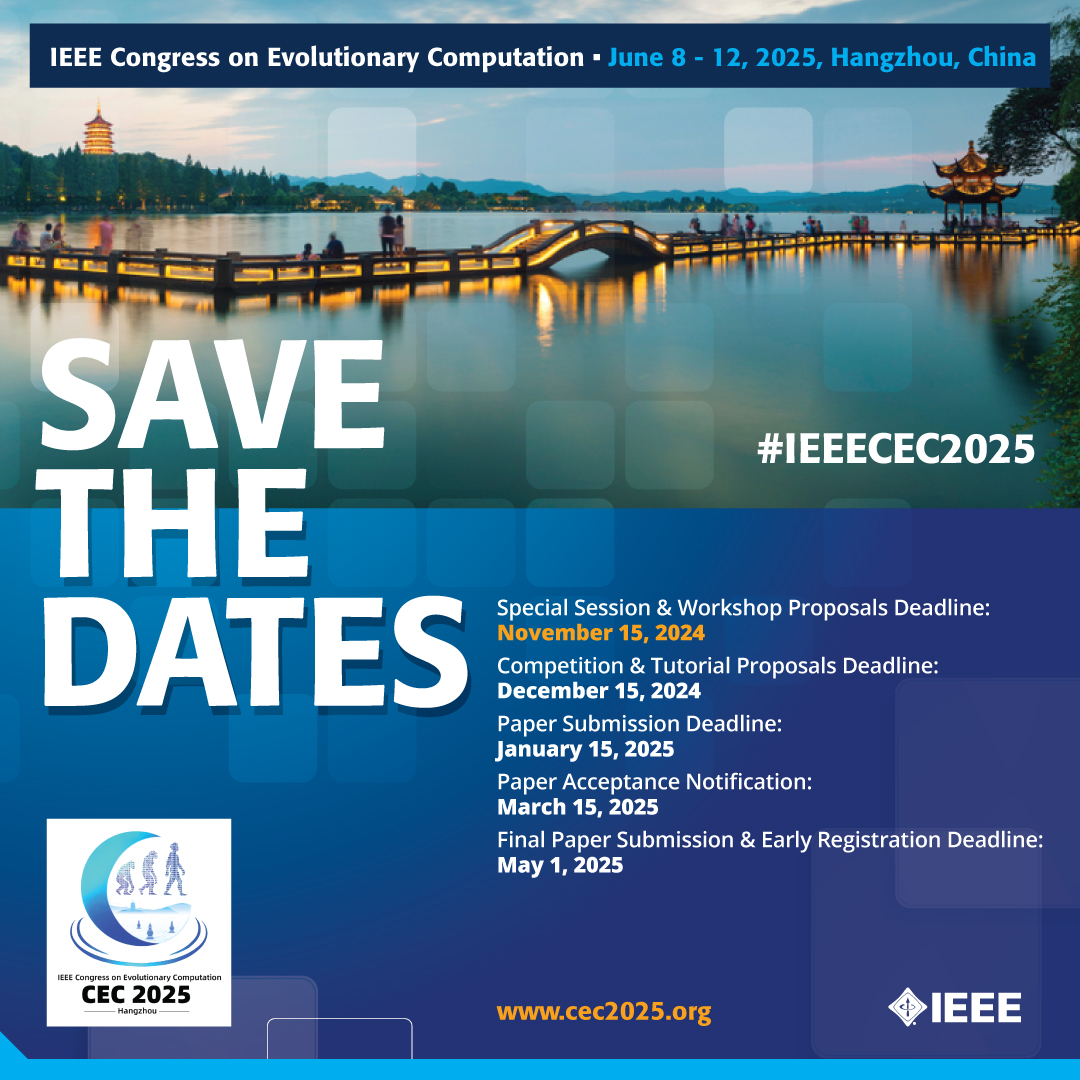
IEEE CEC 2025 Important Dates
November 8th, 2024 Daniela Lopez de Luise
|


SESoS@ICSE 2025 deadline extension (Nov 21st)
November 8th, 2024 Daniela Lopez de Luise The deadline for submissions to SESoS workshop in ICSE 2024 is now set to November 21st (extended). Please share the call for papers with potencial authors and colleagues who are investigating software ecosystems and systems-of-systems.
Best wishes,
November 8th, 2024 Daniela Lopez de Luise
Curso de Systematic Literature Reviews in Software Engineering in Practice – Pre Inscripción
November 8th, 2024 Daniela Lopez de Luise Se encuentra abierta la inscripción al Curso de Postgrado
“Systematic Literature Reviews in Software Engineering in Practice”, a
dictarse del 29 de noviembre al 20 de diciembre.
Este curso NO otorga créditos para el Doctorado en Ciencias Informáticas.
“Systematic Literature Reviews in Software Engineering in Practice”, a
dictarse del 29 de noviembre al 20 de diciembre.
Este curso NO otorga créditos para el Doctorado en Ciencias Informáticas.
IMPORTANTE: EL CURSO SERÁ DICTADO TOTALMENTE EN INGLES
INSTRUCTIVO DE INSCRIPCIÓN:
* Completá el Formulario de Preinscripción:
https://forms.gle/zp4bZzTT3fn2GMeG9
* Te enviaremos un correo con la información sobre documentación
a presentar en caso de que sea necesario, costo y modalidad de Pago.
* Te confirmaremos la inscripción desde este correo electrónico.
“FUNDAMENTOS DE EXPERIENCIA DE USUARIO. USABILIDAD Y ACCESIBILIDAD”
Duración: Dias viernes 29/11, 6/12, 13/12, 20/12
Horario: : 14 a 16 hs.
Modalidad: virtual sincrónico
Programa:https:
https://postgrado.info.unlp.edu.ar/wp-content/uploads/2024/11/2024-Systematic-Literature-Reviews-in-Software-Engineering-in-Practice.pdf
Saludos.
Design by 2b Consult