Anastasios Dagiuklas (London South Bank University) – featured keynote, trending papers on Creative Technologies

Web version
Forward

EAI Insider


This newsletter features:

1.  Keynote by Prof. Anastasios (Tasos) Dagiuklas (London South Bank University)

2. Is it possible to present the same research at multiple conferences?

3. Trending papers on Creative Technologies

presenting featured eai keynote

Prof. Anastasios (Tasos) Dagiuklas is a leading researcher and expert in the fields of smart Internet technologies for smart cities, ambient assisted living, healthcare, and smart agriculture at London South Bank University.

His research interests are 5G networking technologies, programmable networks, V2X communications, and cyber security for smart Internet systems.

Learn more about 5G Technologies and Opportunities for Smart Cities in his lecture.

▶️Watch the lecture

EAI RESEARCH Academy

What are the ethical norms and expectations in academic publishing? Find out if presenting the same research twice at different conferences is a common practice for scientists.

read what others are reading

Discover the most downloaded papers from the latest issue of EAI Endorsed Transactions on Creative Technologies journal.

This study uses behavioral analysis based on participants' reliability scores to detect variation in behavior of users.
Read the article

The primary objective of this study is to ascertain password choice and practices of users of developing countries.
Read the article

In this paper the authors discuss concepts and practices that point to a new field of ubiquitous music (ubimus) research centered on domestic settings. The objective is to document the use of taste as a trigger for creative decisions.
Read the article

EAI is a non-profit organization with free membership and the largest open professional society. At EAI we are proud to empower our members to advance their career through online community participation. With tens of thousands of members from over 170 countries and hundreds of thousands of users EAI provides a leading global platform for research collaboration, fair evaluation, and transparent recognition.

Thank you for being a valuable part of our community. 

Stay safe,

Your EAI team

Special issue call for papers: Ingenuity in Biophysics: Dedicated to Ned Seeman

Special issue call for papers: Ingenuity in biophysics – Dedicated to Ned Seeman
Can't see this email properly? Click here to view an online version
Biophysical Journal Biophysical Society
Special issue call for papers: Ingenuity in biophysics - Dedicated to Ned Seeman
To celebrate the work and creative vision of our colleague and fellow Biophysical Journal editor Ned Seeman, we invite innovative contributions from all areas of biophysics, especially nucleic acid structure, that feature Seeman’s spirit of innovation and ingenuity.

Seeman, who passed away this year a few weeks short of his 76th birthday (see In Memoriam entry in the January 2022 issue of BPS Bulletin), founded and developed the field of DNA nanotechnology more than 35 years ago. He pioneered research that reflects a successful marriage of his unique creativity and superb grounding in the physical and mathematical sciences. From M.C. Escher to DNA knots to robots and medical applications, Seeman’s vision was broad while his craft was meticulous. Using DNA building blocks and self-assembly techniques inspired by sticky ends and branching ideas, he was inspired by Escher’s artworks that emphasized periodicity and multiple dimensions to create connected networks. From DNA cubes and truncated octahedrons, his crystallographic mastery and creativity led to DNA-based nanomechanical devices, with potential applications to technology and medicine.

We welcome contributions from scientists working to advance nucleic-acid structure and function using experimental and computational approaches, as well as other biophysics contributions that celebrate creativity and innovation.

For information on formatting, editorial guidelines, submitting, and related article processing charges, please visit author information page. Please include a cover letter stating that you would like to contribute to the Seeman special issue and describe why the work fits into the Seeman special issue. General questions can be directed to the Biophysical Journal editorial office or to Associate Editor Tamar Schlick.

Deadline for submission: April 30, 2022

Submit your paper

Homepage
 
Editors
 
Submit
 
Alerts

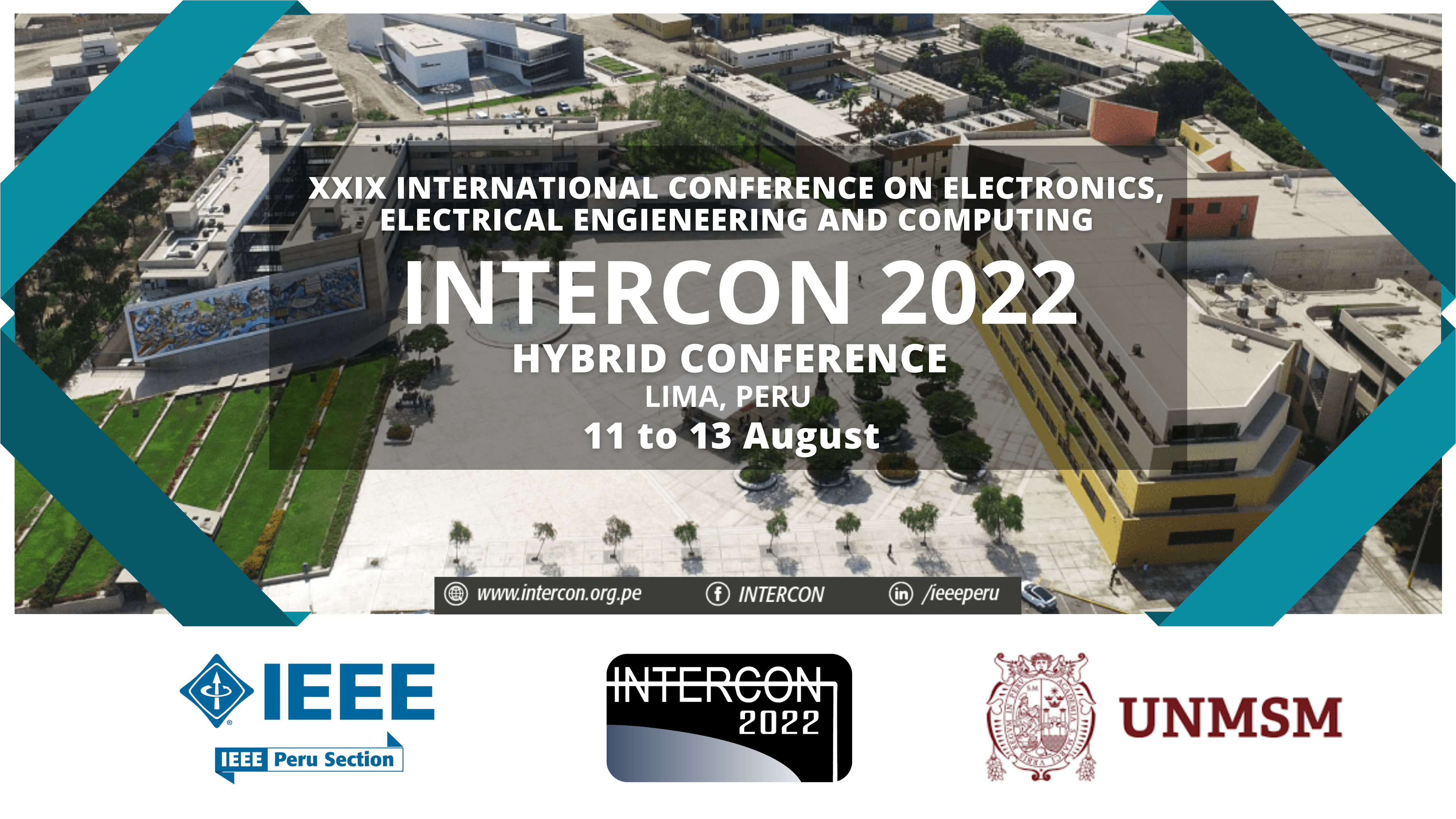
IEEE INTERCON 2022 – XXIX International Conference on Electronics, Electrical Engineering and Computing


INTERCON 2022


Call for Papers: IEEE INTERCON 2022 | XXIX International Conference on Electronics, Electrical Engineering and Computing

We are pleased and honored to invite you to join the 2022 IEEE XXIX International Conference on Electronics, Electrical Engineering and Computing – INTERCON. This conference aims to bring together researchers, professionals, students and entrepreneurs to facilitate the approach, identification and commitment to join challenges that allow the development of technologies for the benefit of humanity.

CFP INTERCON 2022 has been redesigned in a virtual environment, for the safety of our community and to offer an inclusive experience. For oral presentations, will use teleconferences tools to prepare interactive presentation sessions. Remote hosts will use a common remote presence software tool which will be determined and announced by the organizing committee.

Topics of interest include, but are not limited to:

  • Communication systems
  • Semiconductor and devices
  • Computers and information technology
  • Signal processing
  • Systems and control
  • Emerging technologies
  • Circuits and systems
  • Power generation, transmission and distribution
  • Renewable energy sources, smartgrids technologies
  • Optoelectronic materials, devices and systems
  • Climatic change & Renewable energy
  • DC systems in High Voltage, BESS and nuclear power plants.
  • Power electronics, systems and applications
  • Electrical machines and adjustable speed drives
  • High voltage engineering and insulation technology
  • Algorithms and complexity
  • Architecture and organization
  • Graphics and visualization
  • Information management, assurance and security
  • Intelligent systems
  • Parallel and distributed Computing
  • Software engineering
  • Social issues and professional practice
  • Research & Development restrictions and improvements

Submission
The official language of 2022 IEEE INTERCON is ENGLISH. The maximum number of authors per paper, including co-authors is four (4). Papers must be submitted in PDF and no longer than four (4) pages, following the IEEE Conference Template available at:
https://www.ieee.org/conferences/publishing/templates.html
We will use EasyChair system for submissions here:
https://easychair.org/conferences/?conf=2022ieeeintercon
Accepted technical papers will be submitted to the IEEE Xplore Digital Library.

Organizing Committee
Conference Chair: Jorge Lafitte (dr.jorge.lafitte@ieee.org)
Conference Treasurer: Romel Jimenez (rjimenez@ieee.org)
Technical Program Chair: Ricardo Arias (ricardo.ariasvelasquez.eng@ieee.org)
Publication Chair: Jose Duran (joseduran@ieee.org)
Publication Co Chair: Marco Cruz (marcocruz@ieee.org)
Information Contact:
Nicole Caballero (nicole.caballero@ieee.org)
Dario Utrilla (dutrillas@unmsm.edu.pe)
Fiorella Montalvo (fiorella_montalvo@ieee.org)

[+] Information: https://www.intercon.org.pe/2022/

CRNS Talk Series (4) – Live Talk by Prof. Mehul Bhatt – Orebro University – Sweden

The Center for Robotics and Neural Systems (CRNS) is pleased to announce the talk of ProfMehul Bhatt from Orebro University – Sweden on Wednesday, March 16th  from 11:00 am to 12:30 pm (London time) over Zoom.
>> Events: The CRNS talk series will cover a wide range of topics including social and cognitive robotics, computational neuroscience, computational linguistics, cognitive vision, machine learning, AI, and applications to autism. More details are available here:
>> Link for the next event (No Registration is Required)

Join Zoom Meeting

>> Title of the talk:  Artificial visual intelligence: Perceptual commonsense for human-centred cognitive technologies

Abstract:

This talk addresses computational cognitive vision and perception at the interface of (spatial) language, (spatial) logic, (spatial) cognition, and artificial intelligence. Summarizing recent works, I present general methods for the semantic interpretation of dynamic visuospatial imagery with an emphasis on the ability to perform abstraction, reasoning, and learning with cognitively rooted structured characterizations of commonsense knowledge pertaining to space and motion. I will particularly highlight:


  • explainable models of computational visuospatial commonsense at the interface of symbolic and neural techniques;
  • deep semantics, entailing systematically formalised declarative (neurosymbolic) reasoning and learning with aspects pertaining to space, space-time, motion, actions & events, spatio-linguistic conceptual knowledge; and
  • general foundational commonsense abstractions of space, time, and motion needed for representation mediated (grounded) reasoning and learning with dynamic visuospatial stimuli.

The presented works –demonstrated in the backdrop of applications in autonomous driving, cognitive robotics, visuoauditory media, and cognitive psychology– are intended to serve as a systematic model and general methodology integrating diverse, multi-faceted AI methods pertaining knowledge representation and reasoning, computer vision, and machine learning towards realising practical, human-centred, computational visual intelligence. I will conclude by highlighting a bottom-up interdisciplinary approach –at the confluence of cognition, AI, Interaction, and design science– necessary to better appreciate the complexity and spectrum of varied human-centred challenges for the design and (usable) implementation of (explainable) artificial visual intelligence solutions in diverse human-system interaction contexts.

Keywords. Cognitive Vision; Knowledge Representation and Reasoning; Commonsense Reasoning; Deep Semantics; Declarative Spatial Reasoning; Com- puter Vision; Computational Models of Narrative; Human-Centred Computing and Design; Spatial Cognition and AI; Visual Perception; Multimodal Interaction; Autonomous Driving; HRI; Visuo-Auditory Media; Visual Art
>> If you have any questions, please don't hesitate to contact me, 
Regards

GoodBrother Workshop on Visual Intelligence for Active and Assisted Living (GoodBrother-VI4AAL)

GoodBrother Workshop on Visual Intelligence for Active and Assisted Living (GoodBrother-VI4AAL)

As part of the 21st International Conference on Image Analysis and Processing (ICIAP) – https://www.iciap2021.org/

24 May 2022, Lecce, Italy

https://goodbrother.eu/conferences/workshop-iciap/

Paper submission deadline: 15 March 2022


It is a matter of fact that Europe is facing more and more crucial challenges regarding health and social care due to the demographic change and current economic context. The current COVID-19 pandemic is stressing out this situation even further, thus highlighting the need for taking action. Active and Assisted Living (AAL) technologies come as a viable approach to help facing these challenges, thanks to the high potential they have in enabling remote care and support. In this respect, AAL applications based on computer vision, multimedia data processing and understanding, and machine intelligence present several advantages in terms of unobtrusiveness and information richness. Indeed, camera sensors are far less obtrusive with respect to the hindrance that other wearable sensors may cause to people’s activities. In addition to that, a single camera can monitor most of the activities performed in a room, thus replacing many other non-visual sensors. Currently, video-based applications are effective in recognising and monitoring activities, movements, and overall conditions of the assisted individuals as well as to assess their vital parameters (e.g., heart rate, respiratory rate). Nevertheless, as the other side of the coin, cameras are often perceived as the most intrusive technologies from the viewpoint of the privacy of the monitored individuals. This is due to the richness of the information that this technology conveys and the intimate setting where it may be deployed in. Therefore, solutions able to ensure privacy preservation by context and design as well as to ensure high legal and ethical standards are in high demand. This workshop aims to give forum for contributions presenting and discussing image- and video-based AAL applications, projects and research as well as initiatives proposing ethical and privacy-aware solutions.


This workshop is organised by the GoodBrother COST Action (CA19121) on Privacy-Aware Audio- and Video-Based Applications for Active and Assisted Living (https://goodbrother.eu/). The aim of Goodbrother is to increase the awareness on the ethical, legal, and privacy issues associated to audio- and video-based monitoring and to propose privacy-aware working solutions for assisted living, by creating an interdisciplinary community of researchers and industrial partners from different fields (computing, engineering, healthcare, law, sociology) and other stakeholders (users, policy makers, public services), stimulating new research and innovation. Goodbrother will offset the “Big Brother” sense of continuous monitoring by increasing user acceptance, exploiting these new solutions, and improving market reach.


The topics of interest include, but are not limited to, unobtrusive and user-friendly image- and video-based AAL solutions for:

  • Lifelogging and self-monitoring
  • Remote monitoring of vital signs
  • Emotional state recognition
  • Food intake monitoring
  • Human activity and behaviour recognition
  • Personal and daily-life assistance
  • Gesture recognition
  • Fall detection and prevention
  • Mobility assessment and frailty recognition
  • Cognitive and motor rehabilitation


Accepted papers will be included in the ICIAP 2021 proceedings, which will be published by Springer as Lecture Notes in Computer Science (LNCS) series.


Paper submission timetable:

  • 15 March 2022 – Paper submission deadline
  • 7 April 2022 – Notification of acceptance
  • 21 April 2022 – Submission of camera-ready papers
  • 24 May 2022 – Workshop date


More information at https://goodbrother.eu/conferences/workshop-iciap/.


Francisco (Paco) Flórez-Revuelta

http://www.dtic.ua.es/~florez/

francisco.florez@ua.es

Associate Professor

Department of Computing Technology, Research Group on Domotics and Ambient Intelligence

University of Alicante

Carretera San Vicente s/n, 03690 San Vicente del Raspeig, Alicante (Spain)

Coordinator of visuAAL Marie Skłodowska-Curie ITN. Chair of the GoodBrother COST Action

Google Scholar – LinkedIn – Twitter – Slideshare – Facebook


Design by 2b Consult