|
|
|
|
|
|
|
|
|
|
CALL FOR PAPERS – KES 2026
30th International Conference on Knowledge-Based and Intelligent Information & Engineering Systems
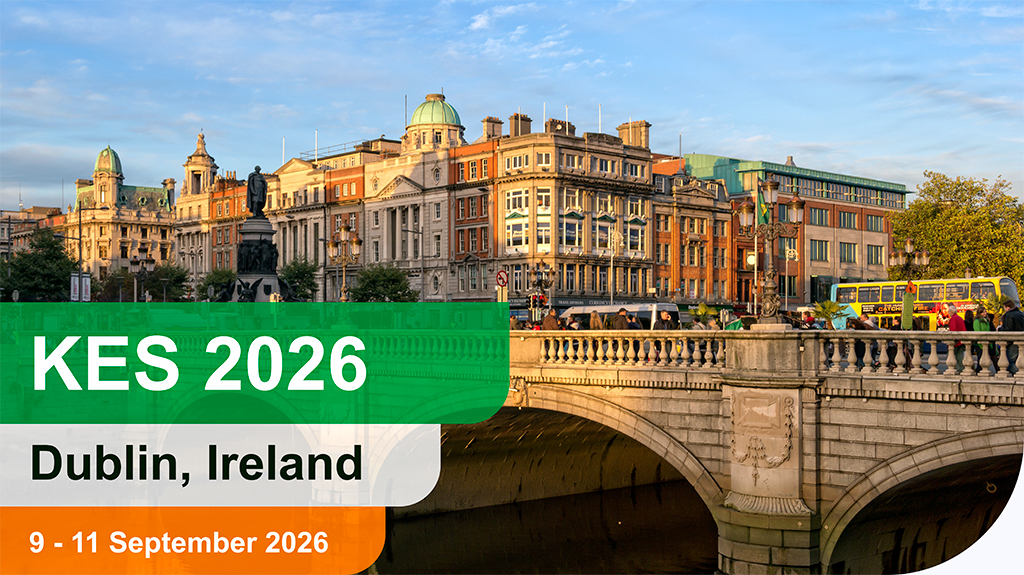
9-11 September 2026 | Dublin, Ireland
Call for Papers
Since it's inception 30 years ago, the International Conference on Knowledge-Based and Intelligent Information & Engineering Systems has been the go-to event for exploring intelligent systems and their applications.
With more than 550 attendees and 5 expert speakers in 2025, the annual KES Conference unites our community to connect, educate, inspire and grow. We are honoured to invite you to submit a paper to share your expertise with our community.
KES 2026 will take place in Dublin, Ireland from 9-11 September 2026. The conference encompasses a broad spectrum of intelligent systems related subjects – the conference scope can be found …here… Below are all of the details and deadlines you need to submit your paper.
|
|
|
|
|
|
|
|
|
|
|
|
SUBMISSIONS NOW OPEN
DEADLINES FOR SUBMISSIONS
- Submission of papers Deadline: The deadline to submit your paper is 30th March 2026.
- Notification of Acceptance: Your submission will be evaluated by 4th May 2026.
- Final Publication Files: Your publication files to be received by 1st June 2026.
To submit your paper, please click on the following link.
|
|
|
|
|
|
|
|
|
|
|
|
Conference Scope
General Track Sessions:
G1: Machine Learning, Artificial Neural Networks and Deep Learning
This track will cover both machine learning theoretical research and its applications. Contributions describing machine learning techniques applied to real-world problems and interdisciplinary research involving machine learning in different application fields with especial emphasis on the design of those systems, are particularly encouraged.
G2: Knowledge Based and Expert Systems
This track covers knowledge-based systems and expert systems, both theoretical research and its applications. Contributions using techniques in knowledge-based systems and expert systems applied to real-world problems, as well as interdisciplinary research involving knowledge-based systems and expert systems in different application fields, are particularly encouraged.
G3: Intelligent Information and Engineering Systems
This track covers both intelligent information and engineering systems, theoretical research and applications.
Intelligent information and engineering systems is a broad topic and includes contributions describing techniques handling real-world problems. It also includes research involving intelligent information and engineering in different application fields.
The topics of interest include (but are not limited to):
- Natural Language Processing
- Agent and Multi-Agent Systems
- Bio-inspired Systems
- Nature Inspired Methods and Optimization
- Image Processing and Signal Processing
- Machine & Computer Vision
- Monitoring and Prediction
- Speech Processing and Synthesis
G4: Industry Applications
This track covers Industry Applications. Contributions describing industry application techniques applied to real-world problems and interdisciplinary research involving industry applications in different application fields, with especial emphasis on industry, are particularly encouraged.
Invited Sessions
An invited session consists of a presentation session of 6 to 12 or more papers on a specific conference topic, organised as half or full day mini-conference. We invite senior scientists who have a special interest in a specific conference topic to take responsibility for an invited session, gathering papers from a range of research expertise around the world.
Researchers who would like to organise one or more Invited Sessions on topics falling within the scope of the conference are invited to submit a proposal for consideration.
|
|
|
|
|
|
|
|
|
|
|
|
Submission Guidelines and Review Process
Authors are invited to submit original, unpublished papers which are not under review for another conference, workshop, or journal by the time of submission. The contributors should address one or more research areas included above.
Detailed submission information is available on the conference page
 February 14th, 2026  Daniela Lopez de Luise
“>TEMPORADA 2026 – Un pago único, todos los cursos
Cursos online con docentes en vivo
Las clases se graban y quedan disponibles
PRIMER NIVEL – HERRAMIENTAS DE IA
IA para todos — Descubrí cómo la inteligencia artificial puede transformar tu día a día
Son 8 clases de dos horas cada una
NIVEL INTERMEDIO – GENERACIÓN DE CÓDIGO PYHTON CON IA + n8n
Formate como ingeniero en IA empezando con Python y n8n
Son 28 clases de dos horas
NIVEL AVANZADO – DESARROLLO DE AGENTES DE IA
FORMATE COMO INGENIERO EN AGENTES DE IA
Es un curso de 4 meses
OTROS CURSOS
Data Analytics con IA Generativa
Es un curso de 6 meses
Nuevo curso de la Ing. Marina Sillitti
Microsoft – Power BI – Serie de 5 cursos
Certificado Profesional en Visualización de Datos de Microsoft
Incluye el acceso a los más de 17.000 cursos de Coursera hasta el 31 de diciembre de 2026
CERTIFICADOS OFICIALES A TU NOMBRE INCLUIDOS
FORMULARIO DE INSCRIPCIÓN: https://forms.gle/4KkU4PZMbjmvt2Xz9
February 12th, 2026 Daniela Lopez de Luise
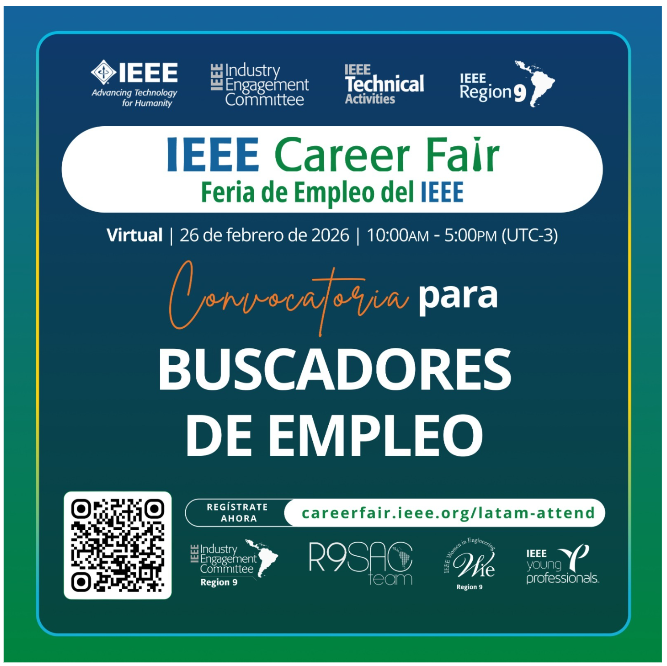
Mi nombre es Milton D. Marche y me pongo en contacto con usted en nombre del comité organizador del IEEE Virtual Career Fair – LATAM Región 9 (26 de Febrero de 2026).
Este gran evento es la FERIA VIRTUAL DE EMPLEOS organizado por IEEE, tiene una modalidad virtual, libre, gratuito y no requiere ser socio de IEEE para inscribirse.
Tiene como objetivo: unir a la Industria con los jóvenes talentos de ingeniería y tecnología de toda América Latina y el Caribe que se encuentren en la búsqueda de su primera o próxima experiencia laboral.
Deseamos por su intermedio contar con su especial apoyo para la difusión del evento en redes sociales, entre sus alumnos, colegas y unidades académicas y así juntos contribuir al vínculo entre de la industria y los profesionales en Latinoamérica.
Desde ya, muchas gracias y quedamos atentos ante cualquier consulta.
_______________________________________________________________________________
🌐 Resumen del Evento: FERIA DE EMPLEO DEL IEEE (América Latina)
- 📅 26 de febrero de 2026, 🕙 10:00 a.m. – 5:00 p.m. (UTC-3)
🌐 Evento virtual Libre y Gratuito a miembros y no miembros del IEEE
👉 Regístrate ahora: https://careerfair.ieee.org/latam-attend/
-
Plataforma: vFairs.
-
Nota: Si estás buscando incorporarte al mundo laboral, cambiar de trabajo o explorar nuevas oportunidades entonces debes registrarte a este evento virtual y gratuito diseñado para conectar a estudiantes, recién graduados, jóvenes profesionales y expertos en tecnología. Participan reclutadores y organizaciones líderes en toda América Latina y el Caribe.
_______________________________________________________________________________
Saludos
Ing Milton Damián Marché
Miembro del Comité IEEE Virtual Career Fair . Latam R9
Nury Ramirez
IEEE Career Fair (Latin America)
Organizer
February 12th, 2026 Daniela Lopez de Luise
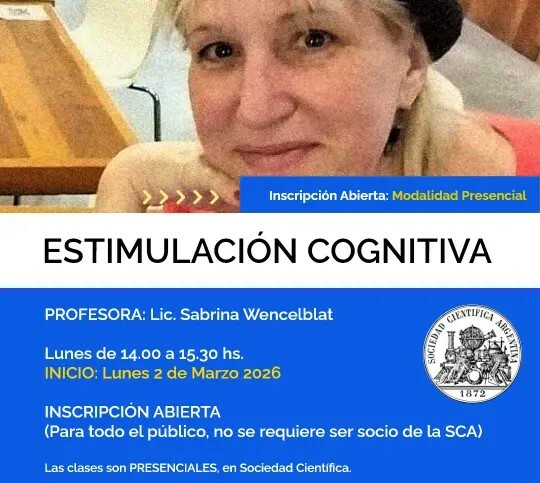
Taller de estimulación cognitiva para personas mayores
February 10th, 2026 Daniela Lopez de Luise
|
|
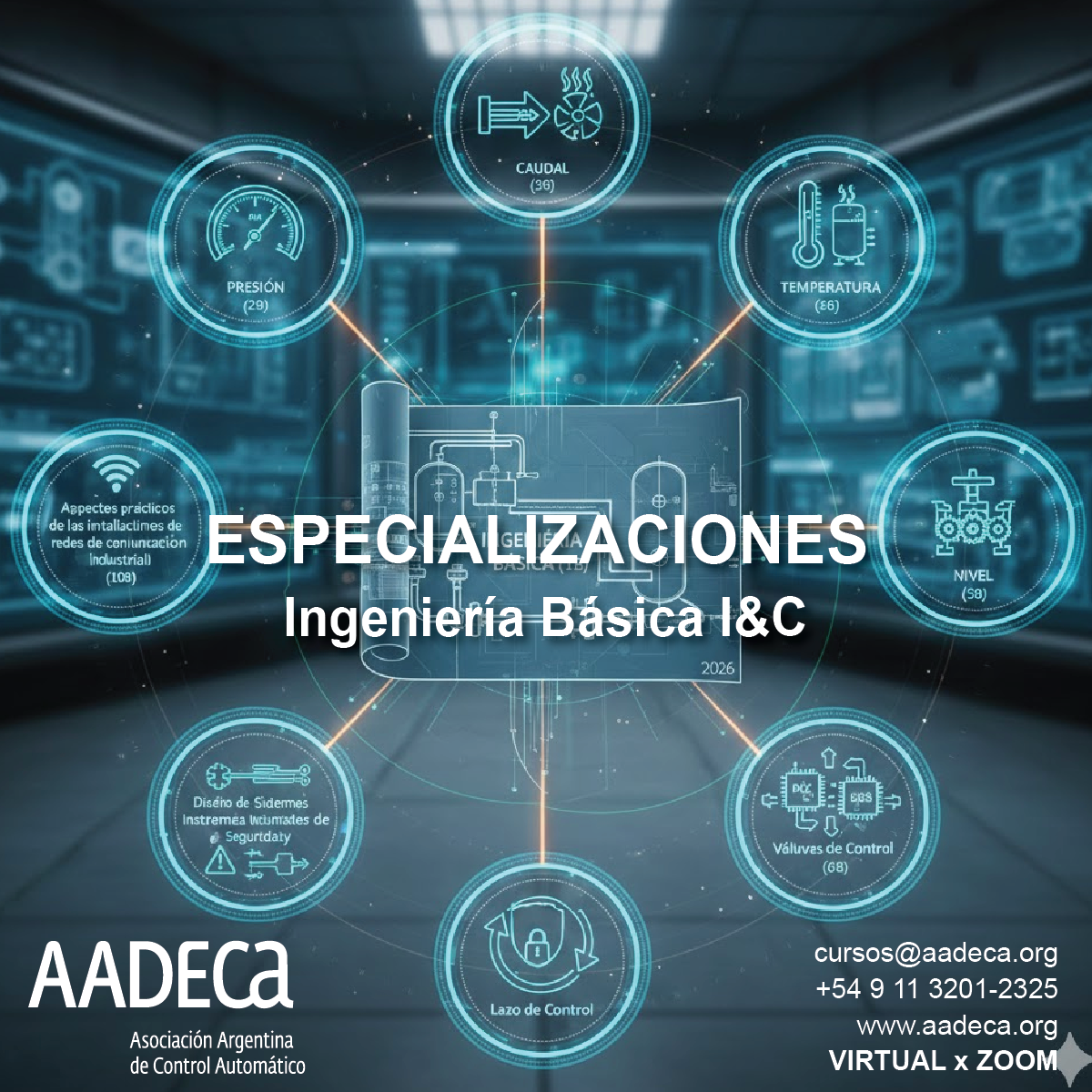
Estimados colegas y profesionales del sector:
Nos complace anunciar el cronograma de Especializaciones correspondientes al curso de Ingeniería Básica en Instrumentación & Control. Estas instancias están diseñadas para profundizar en los pilares técnicos fundamentales y las nuevas tecnologías que demandan la industria actual.
A continuación, detallamos la oferta académica para el ciclo 2026:
Calendario de Especializaciones
| Módulo |
Especialización |
Fecha(s) |
Información |
| 1B |
Proyecto y Documentación de Ingeniería Básica |
15 de abril, 17 a 20 hs |
👉Ver programa |
| 2B |
Presión |
17 de abril, 17 a 20 hs |
👉Ver programa |
| 3B |
Caudal |
24 de abril, 17 a 20 hs |
👉Ver programa |
| 4B |
Temperatura |
5 y 8 de mayo, 17 a 20 hs |
👉Ver programa |
| 5B |
Nivel |
12 de mayo, 16 a 19 hs |
👉Ver programa |
| 6B |
Válvulas de Control |
22, 29 de mayo y 5 de junio, 17 a 20 hs |
👉Ver programa |
| 7B |
PLC-DCS-SCADA: Diferencias y Similitudes |
10, 12, 17 y 19 de junio,17:30 a 20:30 hs |
👉Ver programa |
| 8B |
Lazo de Control |
11 y 18 de junio, 17 a 20 hs |
👉Ver programa |
| 9B |
Diseño de Sistemas Instrumentados de Seguridad |
6, 8, 10, 13, 15, 17 y 20 de julio, 17 a 20 hs |
👉Ver programa |
| 10B |
Instalaciones de Redes de Comunicación Industrial |
10, 12 y 14 de agosto, 17 a 20 hs |
👉Ver programa |
Beneficio Exclusivo: Si sos alumno actual o participaste del curso de Ingeniería Básica de ediciones anteriores,
¡tenemos un beneficio para vos!
10% de descuento en cada especialización en la que decidas inscribirte
Es una excelente oportunidad para actualizar conocimientos y fortalecer tu perfil profesional con el respaldo y la excelencia técnica que nos caracteriza. No te lo podes perder…
¡Te esperamos!
VER PROGRAMACIÓN COMPLETA DE CURSOS Y WEBINARS AQUÍ
Consultas a cursos@aadeca.org o por whatsapp 011 3201-2325
|
|
| | | | |




 R9-Career-Fair-Presentation-ESP.pdf